All posts by Timothy Kauffman

Tim graduated from Gettysburg College with a degree in political science and was commissioned as a second lieutenant in the US Army. The war in Vietnam was very active and the US Army Physical Therapy School was accepting only female students. His request for deferment was granted so that he could pursue a degree in physical therapy from the University of Pennsylvania. After graduation, the Army transferred him to the Army Medical Specialist Corps to become a physical therapist. After serving almost 6 years, he returned to graduate school and remained in the US Army Reserves. His area of interest at the Medical College of Virginia was aging. His seminal research showed that older persons can gain muscle strength with good exercise training and that persons over the age of 90 years can be rehabilitated successfully after a hip fracture. He earned his PhD from LaSalle University. Tim has been a physical therapist in all settings from pediatrics, across the lifespan, sports and orthopedics in general hospitals, home health, hospice and private practice. He has taught in academics, clinically and around the world especially with Health Volunteers Overseas as well as presenting at World Confederation of Physical Therapy meetings. Dr. Kauffman is a Fellow in the American Physical Therapy Association and the Gerontological Society of America. He is the lead editor of the textbooks, Geriatric Rehabilitation Manual, 1st and 2nd Editions and A Comprehensive Guide to Geriatric Rehabilitation which is also available in a Chinese translation. He ended his military service as a military historian. He remains active teaching a Better Bones Better Balance class to community dwellers.

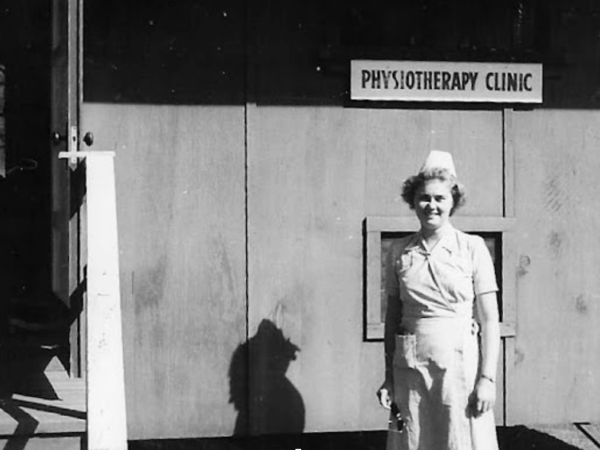
1LT Bette Horstman in front of the PT Clinic Saipan 1945

How US Army Physical Therapy Pioneered Direct Access

The untold story of how war, necessity, and innovation transformed physiotherapy forever. When today’s US physical therapists evaluate a patient without a referral, few realise that the roots of this autonomy stretch back to the battlefields of the 20th century. Long before “direct access” became a catchphrase for professional independence,

Translate »