

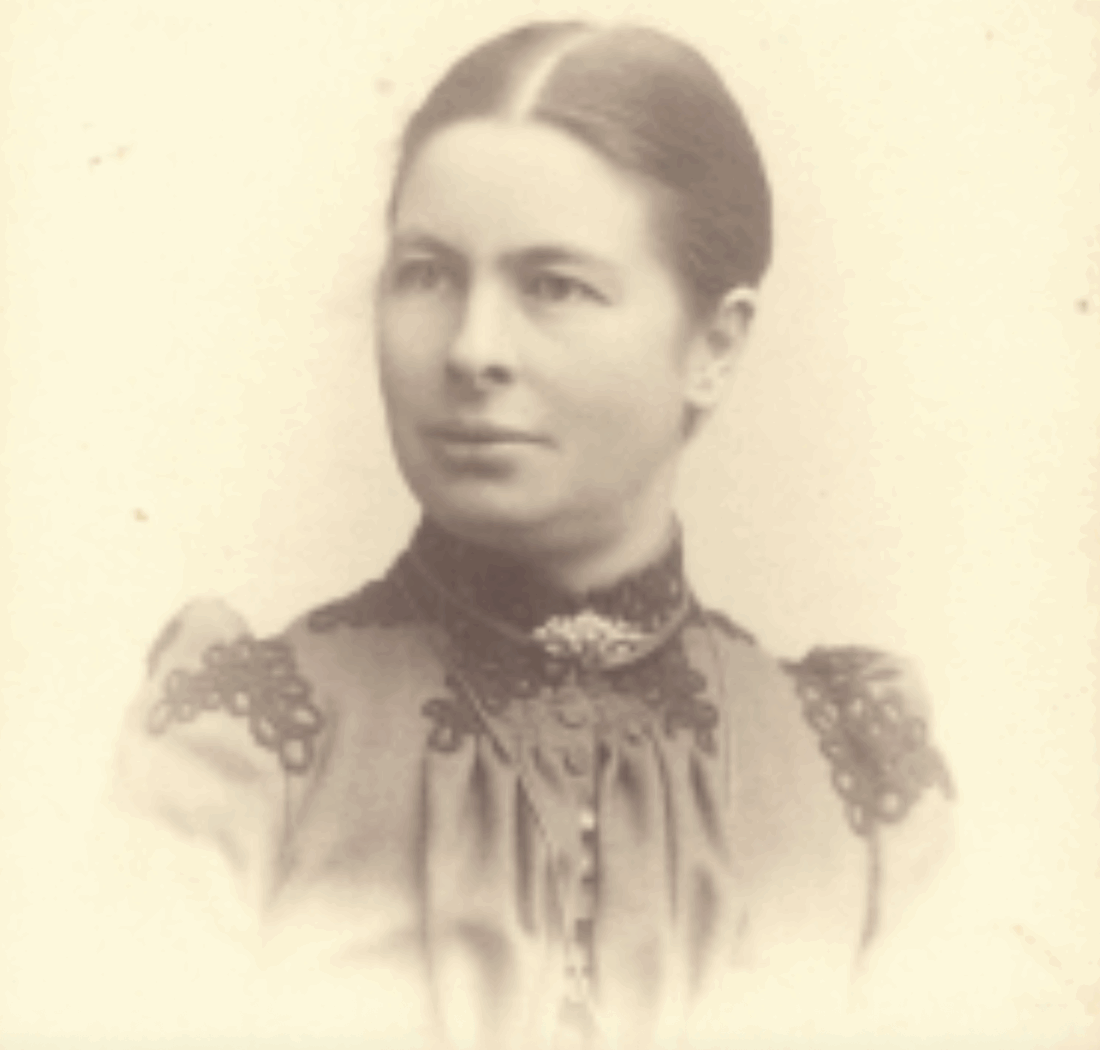
Karolina Widerström was born in Helsingborg, Sweden in 1856. Her father worked variously as an army veterinarian, a physiotherapist, and as a teacher.
After attending a girls’ school in Helsingborg, Widerström herself trained as a physiotherapist at the Royal Central Institute for Gymnastics from 1873 – 1875. She then worked as an assistant to Gabriel Branting, head of the Institute. Subsequently Widerström enrolled at Uppsala university, from where she graduated with a basic medical degree in 1880, becoming the first female physician in Sweden. She then went on to study at Karolinska Institute.
Following the awarding of her medical degree in 1888 Widerström was appointed as assistant to Wilhelm Netzel, professor of gynaecology at Karolinska Institute, despite the fact that at that time women were barred from holding university posts.
In 1889 Widerström opened her own surgery in Stockholm, and was immediately inundated with a steady stream of female patients. She very quickly realised that they knew nothing about their own bodies, of sexuality, reproduction, or of venereal diseases. From the outset she felt that it was an essential duty of hers to impart knowledge on these matters and she did so by giving public talks and by writing newspaper articles and publishing pamphlets.
Her article “Om menstruationen och dess hygiene” (About menstruation and its hygiene) was published in the journal Idun in 1896. It cause offence and two editions later the editor commented that “in order to soothe those who had been upset” the medical articles contained within the journal would in future only concern matters which “will not give rise to consternation in this regard”.
Widerström was not about to be silenced. She published, lectured and politicked on women’s health and their rights, whilst also laying claim to her own rights. A typical example of the latter is an anecdote about how she once insisted that the entry price to one of her talks should be raised. She said,
The low entry fee is a symptom of the undervaluing of intellectual effort which is increasingly a sign of the times”,
and then demanded more than double the original price.
Karolina Widerström was active in a great many women’s organisations and, following the introduction of general suffrage in 1921, she served as chair of Landsföreningen för kvinnans politiska rösträtt (National Women’s Suffrage Association). As a member of the Stockholm town council from 1912–1915 her particular concern lay in children’s health and she encouraged physical activity and outdoor experiences.
Girls’ clothing was an important issue for her. Karolina Widerström had already been involved as a student, in 1886, in setting up Svenska dräktreformföreningen (Swedish Association for the Reform of Women’s Dress) and that same year she gave her first public talk on the subject. She opposed the use of bustles and corsets which impeded freedom of movement and proposed different loose-fitting clothes.
Widerström would return to the subject of the physical health of girls throughout her life. She completely rejected the concept – accepted by doctors and mentioned during school debates – that puberty in women was a period of weakness. Widerström believed the opposite was true, that during early puberty girls were often more developed than boys.
She lived with her mother until the latter’s death in 1909 and then moved in with her friend Maria Aspman. Their apartment at Fleminggatan 30, Stockholm, also served as her surgery.
Widerström died in 1949, aged 93, and lies at the Solna cemetery. A street has been named after her in Fruängen, in the southern suburbs of Stockholm – Doktor Widerströms gata. In 2013 the Widerströmska building at the Karolinska Institute was named after her.
References
Ohlander, A. (2018). Karolina Olivia Widerström. From the Svenskt kvinnobiografiskt lexikon website. Accessed online at https://skbl.se/en/article/KarolinaWiderstrom
