
This is a collection of our latest and greatest content from our talented writers.
Tag: Featured
Her story
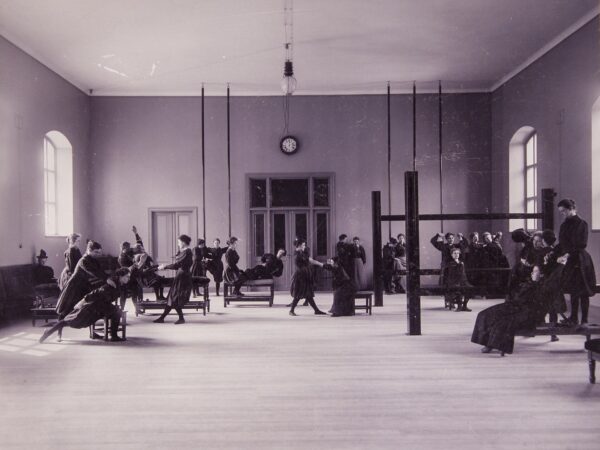
In the late 19th century, the medical world was turbulent, competitive, and surprisingly entrepreneurial. Among the more transformative developments was the rise of mechanical medicine—manual techniques, movement therapies, and massage—that challenged the conventional drug-based treatments (pharmacology) of so-called orthodox or regular medicine. While attention has been paid to the professionalisation …
Statue Returned
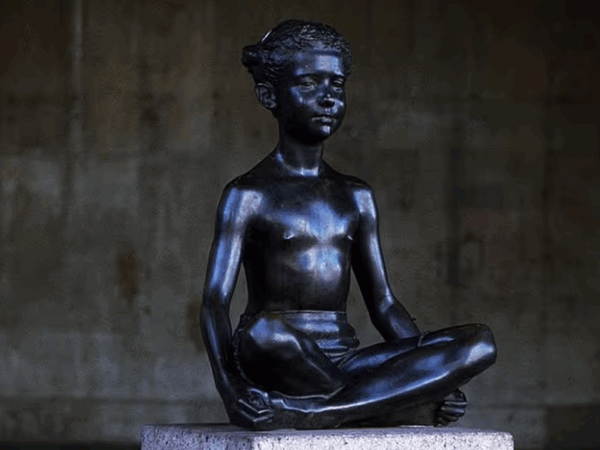
Stolen Statue
In 1812, the Swedish government approved Pehr Henrik Ling’s application to teach gymnastics in Stockholm and receive a salary and premises through state assistance. Ling had developed a comprehensive system that included pedagogical (physical education), aesthetic (dance), military (fencing) and medical (physiotherapy) gymnastics; with the purpose of raising the physical …
Royal Central Institute for Gymnastics
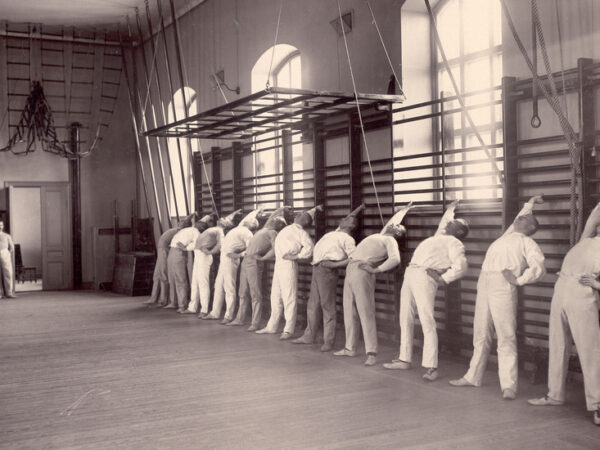
In the early 1800s as the Napoleonic Wars were reshaping the European map. Sweden had Finland and its’ eastern provinces ceded to Russia, and to the west the Swedish-Norwegian union occurred. It was shock to the previously dominant nation. The Swedish government was in chaos and there was a growing …
Molly Levy – Mother of South African Physiotherapy
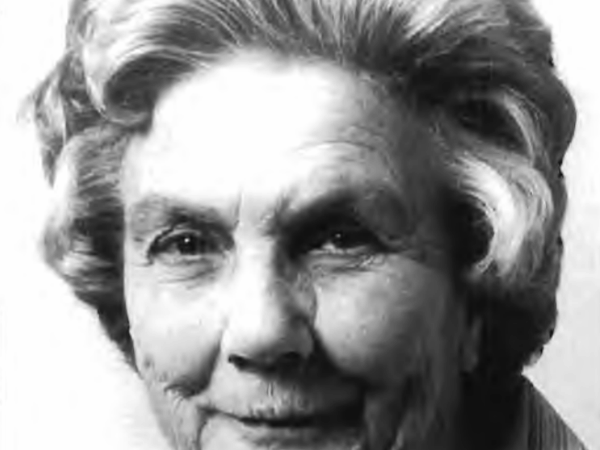
Integrity, exactitude, knowledge and wisdom, are appropriate adjectives for Molly Levy, foremost among the women who might qualify for the title “Mother of South African Physiotherapy” Like many South Africans in the early years of the profession, Kate Molly Levy (nee Limerick) travelled overseas to qualify – in her case, …
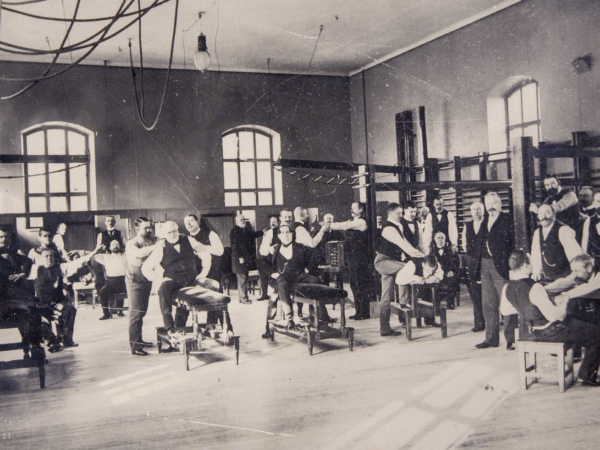
King Kellgren: The Father of Manual Therapy
In a newly published book, titled The Lost Origins of Osteopathy and Chiropractic in European Mechanical Medicine and Physical Education, C. 1800-1950 author Anders Ottosson argues that osteopathy, chiropractic, orthopaedic medicine and orthopaedic manual physical therapy all have a common origin – early Swedish physiotherapy. Whilst manual therapy is as …

Earthquake in Pakistan
On the 20th Anniversary, a review of the impact of the 2005 earthquake on the physiotherapy profession in Pakistan. On 8 October 2005 an earthquake of magnitude 7.6 points on the Richter scale shook the hills and mountains of Azad Jammu and Kashmir in Pakistan. This devastating event was a …
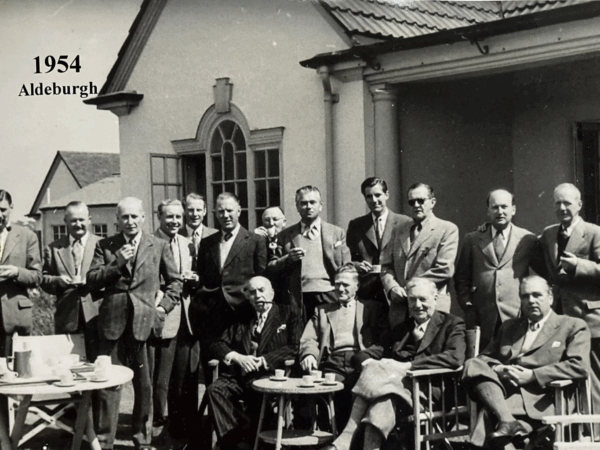
The Swedish Golfing Society
On the evening of 26 March 1912, twelve Swedes met at the Golfers’ Club in Whitehall Court, London. They were invited to the meeting by Detlof von Braun to discuss the formation of a Swedish Golfing Society. At the time interest in sport was ever increasing. The previous Olympic Games …
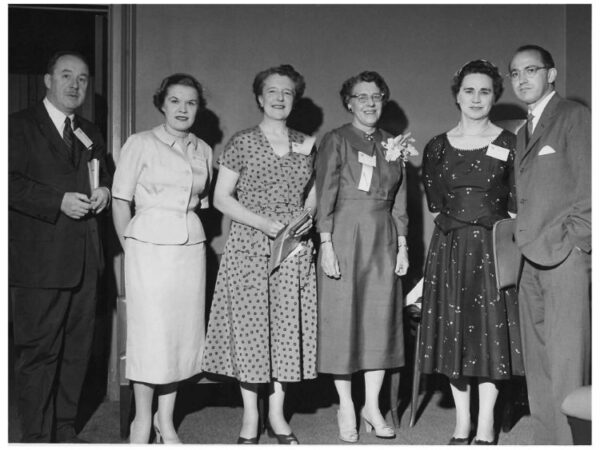
An Irish Tale of the 2nd WCPT Congress in New York
Among my earliest memories is one of listening to my mother – Pat Webb, née Toner- talking about New York and the 2nd World Confederation of Physical Therapy (WCPT) Congress which she attended in 1956. As I write this second-hand reminiscence, World Physiotherapy (as WCPT is now known) president Mike …
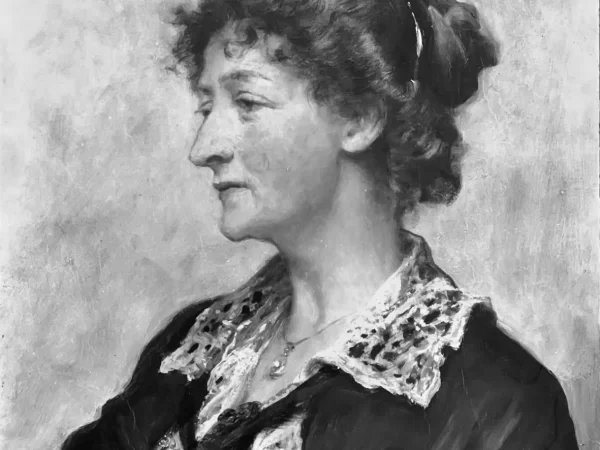
Justina Wilson – Twice the Fellow
The following obituary of Justina Wilson was published in the British Medical Journal in 1950. Whilst incorrect in some minor areas and lacking in others, it nevertheless demonstrates her extraordinary physiotherapy and medical achievements, and tells of a life fully lived. The two most significant omissions are her Honorary Fellowship …
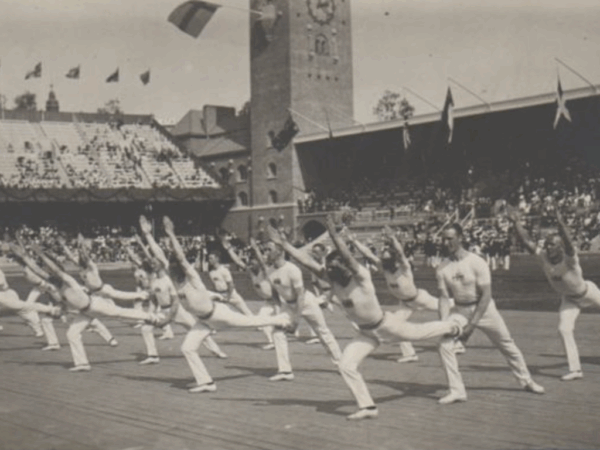
Swedish Gymnastics at the Olympic Games
The Swedish gymnastics of Pehr Henrik Ling consisted of four branches: military (fencing), medical (physiotherapy), pedagogical (physical education) and aesthetic (dance). For the latter two, the system emphasised floor exercises along with “Swedish bars” (attached to a wall), balance beam, vaulting box and some hand-held apparatus. The movements were generally …