
Tag: gymnastics
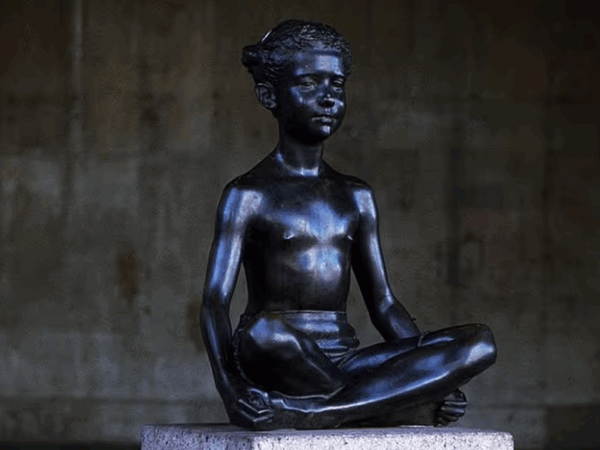
Stolen Statue
In 1812, the Swedish government approved Pehr Henrik Ling’s application to teach gymnastics in Stockholm and receive a salary and premises through state assistance. Ling had developed a comprehensive system that included pedagogical (physical education), aesthetic (dance), military (fencing) and medical (physiotherapy) gymnastics; with the purpose of raising the physical …
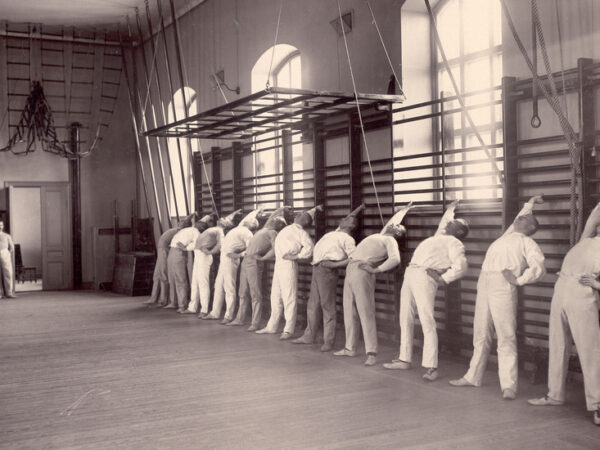
Royal Central Institute for Gymnastics
In the early 1800s as the Napoleonic Wars were reshaping the European map. Sweden had Finland and its’ eastern provinces ceded to Russia, and to the west the Swedish-Norwegian union occurred. It was shock to the previously dominant nation. The Swedish government was in chaos and there was a growing …
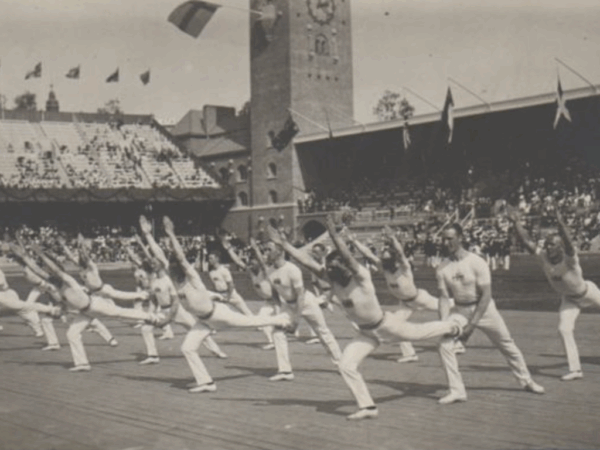
Swedish Gymnastics at the Olympic Games
The Swedish gymnastics of Pehr Henrik Ling consisted of four branches: military (fencing), medical (physiotherapy), pedagogical (physical education) and aesthetic (dance). For the latter two, the system emphasised floor exercises along with “Swedish bars” (attached to a wall), balance beam, vaulting box and some hand-held apparatus. The movements were generally …
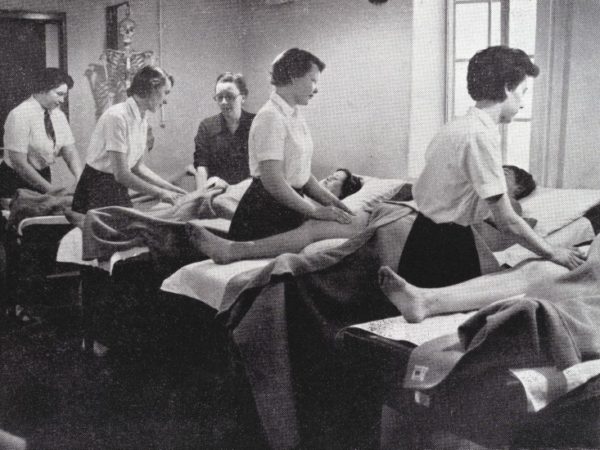
‘Essays on Massage History 1750 – 1950’: Book Review
As an adjunct health service or a junior partner to medicine, massage has oft lacked respect. So much so, that even its own history has remained poorly understood. Massage needed someone to come along to provide intellectual rigour to its story, and it came in an unlikely form – a …
American Physical Therapy Before the War
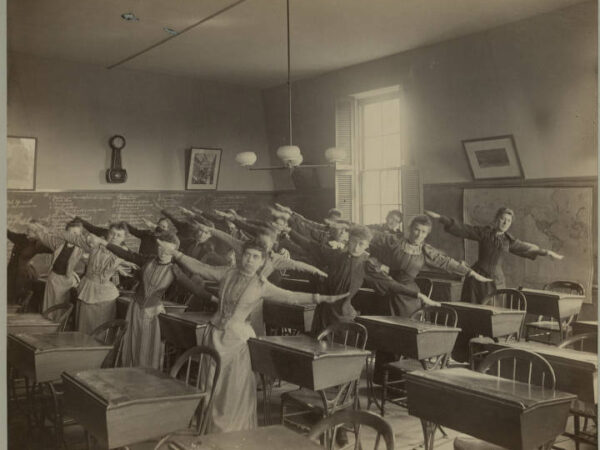
The commonly accepted premise of the origins of the physical therapy profession in the United States is that it began in response to the First World War (Hansson & Ottosson, 2015). This understanding has likely arisen from the hegemonic American Physical Therapy Association (APTA) focussing its historical work on its …

On the Origins of Netball
The international game of netball can trace its popularity and codification to a unique college of Swedish gymnastics in the United Kingdom at the turn of the nineteenth century. The all-female college was also at the heart of the development of both the physical education and physiotherapy professions. Women’s Basketball …

Dr Bum’s Famous Institute of Mechanotherapy
The term ‘mechanotherapy’ was introduced by Swedish physician Gustav Zander to define a method of treating certain illnesses through massage and exercise, particularly using mechanical equipment. The exercises were drawn from the work of countryman Pehr Henrik Ling, but the equipment was Zanders, and in 1865 he opened the world …

My European Study Tour
In 1903 Australian proto-physiotherapist Josephine McCormick visited the principal physical culture institutes of Europe, in London, Paris, Vienna and Berlin. She also undertook courses of study with orthopaedists Professor Adolf Lorenz of Vienna, and Dr Bernard Roth of London. Professor Lorenz was a founder of the German society of Orthopaedic …
The Sunlight League
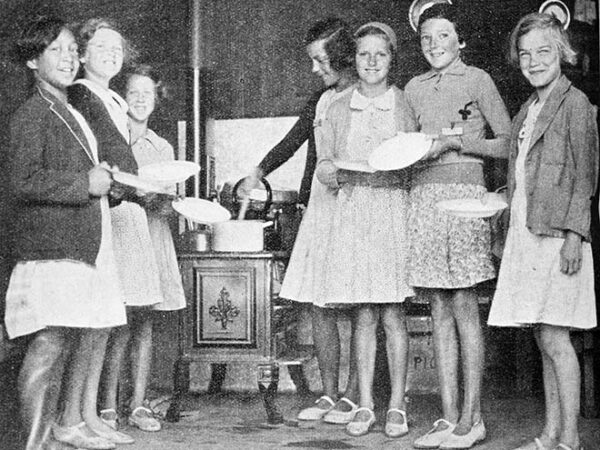
Physiotherapist Cora Wilding founded the Sunlight League in New Zealand, was instrumental in establishing the Youth Hostel Association and was one of the most passionate advocates for the physical culture movement. The Physical Culture Movement was a health and fitness movement that began in Europe during the 19th century, spreading …
De Arte Gymanstica – The Art of Exercise Prescription
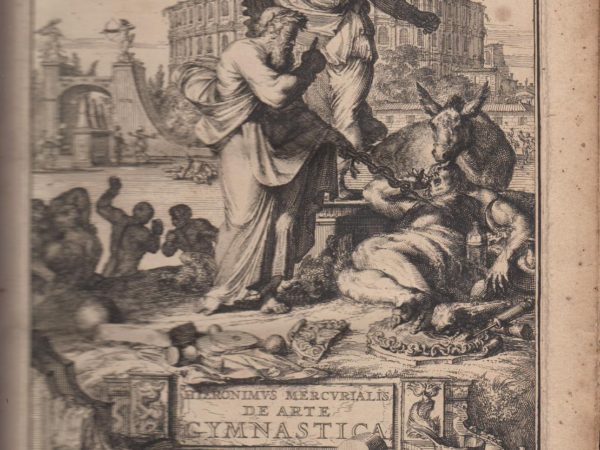
Although books dating back to ancient Chinese, Indian, Arabic, Greek and Roman civilisations contained numerous accounts of physical therapies (Galen reports that Roman emperor Julius Caesar used electric fish to treat neuralgia, for instance), De Arte Gymnastica may be the first book dedicated to the specific prescription of those physical …