

Following the First World War, Australia concluded that Japan’s expansionist ambitions in the Pacific posed the greatest threat to its national security. Britain was equally determined to protect its Asian territories — India, Burma, Malaya and Hong Kong — from Japanese encroachment.
The Singapore Strategy
In 1919 Singapore, strategically positioned in the Strait of Malacca, was selected as the site of a major Royal Navy base. The plan was simple: in the event of war, Britain would dispatch a large fleet to Singapore to defend its eastern empire. Construction began in 1923, with Australia and New Zealand contributing to the cost, content to shelter under Britain’s protection rather than develop costly independent defence capabilities.
When the Second World War broke out in Europe in 1939, Australia committed most of its forces to supporting Britain. But as tensions with Japan mounted, the 8th Division, four RAAF squadrons and eight warships were dispatched to Singapore and Malaya in February 1941.
The Singapore Strategy was already unravelling. Britain, fighting for its own survival against Germany, could not honour its commitments in the east. The promised fleet had been reduced to just two vessels, the battleship HMS Prince of Wales and the battlecruiser HMS Repulse, both of which were sunk by Japanese aircraft on 10 December 1941, leaving Singapore without naval protection.
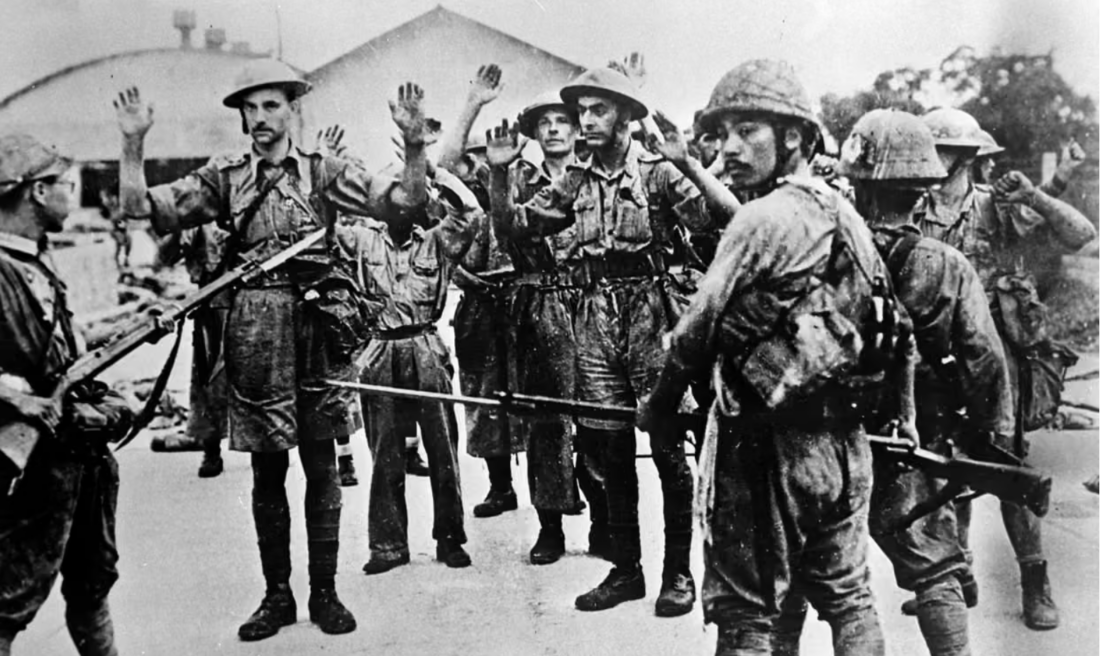
The Japanese had invaded Malaya on 8 December, sweeping 700 kilometres down the peninsula in under two months. Allied forces withdrew south to Singapore on 31 January 1942, but the island’s defence was poorly planned, air cover had been destroyed and Japanese bombers struck the city at will. With a million civilians trapped and water supplies failing, British Lieutenant General Arthur Percival surrendered on 15 February. More than 130,000 Allied troops were taken prisoner.
Physiotherapists at War
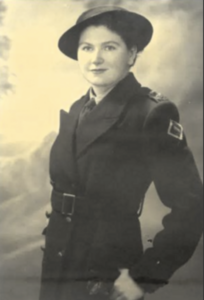
Audrey Simpson, physiotherapist Australian Army Medical Corps, Audrey Abbie Collection, University of Adelaide Archives
Just fourteen months before the fall of Singapore Audrey Simpson, from Adelaide, South Australia, received her Diploma in Massage, Medical Electricity and Medical Gymnastics. She, and previous year’s graduate, Marjorie Hill, shortly enlisted in the Australian Army Nursing Service (AANS).
In August 1941 the pair boarded the Wanganella, a designated hospital ship, bound for the Malaya peninsula. On board they met a third physiotherapist, Cynthia Sutton, from Melbourne. For security reasons the ship’s complement were not informed of their destination until after departing their last Australian port at Fremantle. Assuming they were going to Europe all had packed for a cold winter rather than a tropical jungle.
The 2/13AGH (Australian General Hospital) personnel disembarked in Singapore on 15 September 1941. They consisted of 216 staff: 20 officers, 49 nurses, 3 physiotherapists, 17 non commissioned officers and 127 ordinary ranks. Additional personnel joined them from the 2/10AGH and 2/4 Australian Casualty Clearing Station (2/4ACCS), units which had been in Malaya since early 1941.
Initially the unit had nothing to do; no hospital to work in and no patients. Most marked time in their comfortable quarters at St Patrick’s School in Singapore. They attended medical lectures and demonstrations, and rehearsed admitting battle casualties. The three Australian physiotherapists assisted the physiotherapists in the Singapore General Hospital where civilians were treated, and with the nurses trained the unit’s medical orderlies in basic first aid.
Free time was occupied with acclimatising, touring and a great deal of socialising. They played tennis in the officers’ clubs. They explored Singapore’s shops, cinemas and bars. As honorary officers the nurses and physiotherapists had entry into the luxurious Raffles Hotel and other exclusive clubs. They could socialise with each other and with British and Australian officers, eat, drink and dance.
On 23 November 1941 after marking time for ten weeks the 2/13AGH moved to Tampoi near Johore, 30 kilometres northwest of Singapore city and on the mainland side of the causeway to the island. They set up in a newish but incomplete mental health facility spread over a large area on the edge of a jungle. Most admissions had fungal infections, minor abrasions or, of most interest to the physiotherapists, broken bones from motor bike accidents.
Japan Attacks
When Japanese forces attacked Pearl Harbour on 6/7 December 1941, South Asia and the Pacific became war zones. At 2/13AGH the personnel donned Red Cross armbands and prepared to double the capacity to 1,200 beds. Initially there was no fighting near Tampoi. A few patients injured in bombing raids on Singapore Island were admitted but most new admissions were as before, with skin or stomach complaints or accidental injuries.
In early January 1942 the arrival at Tampoi of 2/10AGH personnel evacuated from Malacca 200 kilometres north and a sharp increase in casualty numbers signalled that danger was coming. Just a few weeks later the situation for 2/13AGH at Tampoi changed dramatically. In the words of the unit’s unofficial historian,
..the war hit us right between the eyes. Men, on stretchers with tickets pinned to them showing the most urgent injuries, were delivered in rapid succession from transports of all types.”
The physiotherapists worked alongside the nurses in the wards and theatre. It was trying: plaster bandages for fractures had to be improvised using mosquito netting and wounds under plaster festered in the heat. The hours on duty were long.
The Japanese bombardment of the southern part of the Malayan Peninsula intensified and casualties arrived at Tampoi in ever increasing numbers. British and Commonwealth forces began retreating from the southern tip of the Malayan Peninsula, back across the causeway to Singapore. On 24 January 1942, 2/13AGH itself hastily withdrew from the Tampoi site and returned to St Patrick’s College on the island. The scenes were of orderly chaos and Hill described the relocation,
The Japs were extremely hot on our heels … People told us that no AGH could be removed under 6 weeks! You just should have seen us pelting up and down stairs with mattresses on our heads and iron bedsteads practically tucked under our arms. I have never seen people work so hard, or so cheerfully … By the end of the second day nothing was left in Johore – not even the fixed wash hand basins, and all the patients were in bed in Singapore.”
Back in Singapore the hospital was inundated with wounded patients. Hill recounted the scene,
Once the Japs got onto the island we turned into a casualty clearing station, and were admitting men straight from the front line. The 3 of us (masseuses) spent practically all our time in the theatre as we did all the plaster work, and the routine treatment of wounds after excision was to dust them with sulphanilamide powder, and pack them with vaseline gauze, and put them in a closed plaster. When we were not plastering, we were acting as theatre pros [trainee nurses] or as ‘secretaries’ to the surgeons, who couldn’t spare the time to write up descriptions of the operation in case notes. If there was ever a lull in the theatre, we went into the resuscitation ward … We took it in turns to work back at night, one of us working right through till morning, another staying until the rush was over, usually about 2 a.m., and the third SLEEPING.”
In fact Hill understated the work that the three physiotherapists did, particularly their inventiveness and efforts to maintain traction for patients with serious fractures. They were buoyed by the matron’s expression of gratitude when she said,
..she really did not know how the hospital would have got on without us. She had always thought of masseuses as ladies of leisure, but not us we’d been wonderful.”
Bombs and shells fell around the hospital daily. Protected by its visible Red Cross the buildings were hit only once. The kitchen was all but destroyed but there were no injuries.
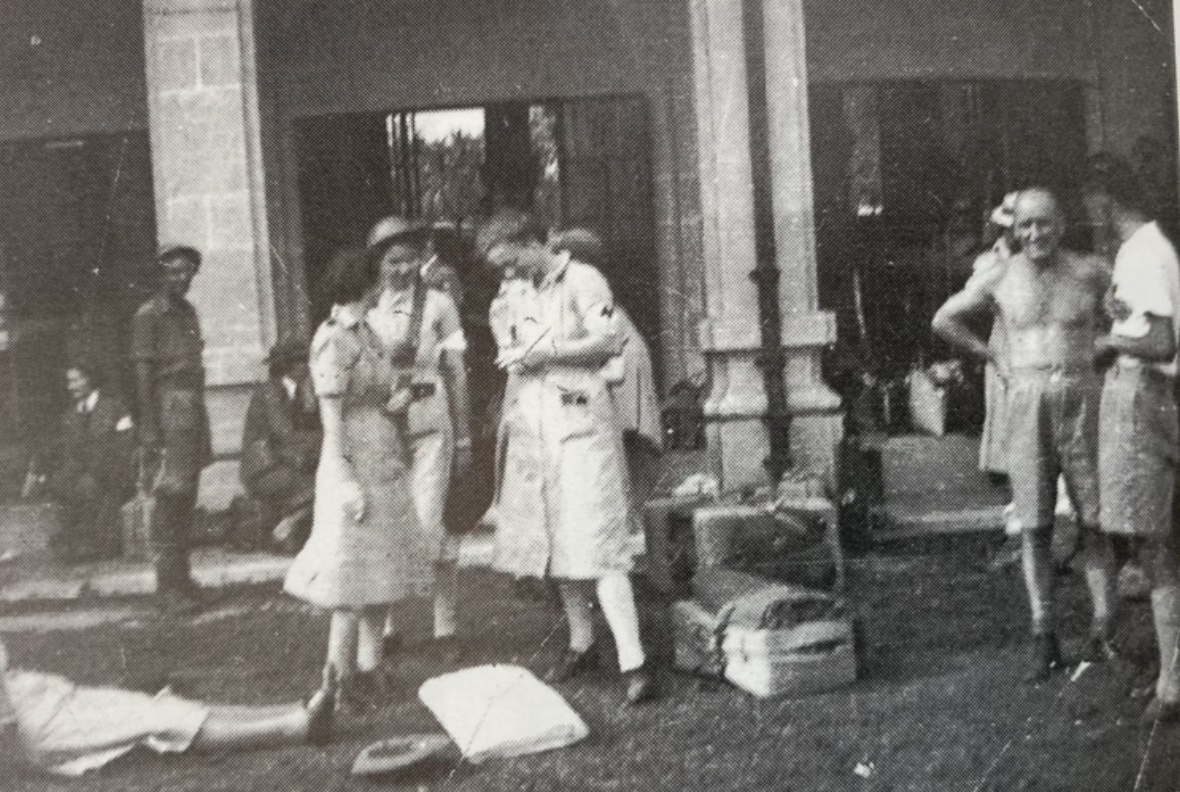
Audrey Simpson and Cynthia Sutton talking with a nurse on the last day at St Patricks School, Singapore.
Evacuation
By 10 February 1942 the situation in Singapore had worsened. The evacuation of patients and women, including the AANS nurses and physiotherapists, became imperative. On 12 February dangerously ill patients left Singapore on the ship Wah Sui with six nurses. The remaining nurses and physiotherapists refused to leave voluntarily. Matron Olive Paschke (2/10AGH) randomly selected 59 including the three physiotherapists and ordered them to prepare for immediate embarkation on the ship Empire Star. The remaining 65 were to follow on a coastal steamer called the Vyner Brooke. “That was the worst moment of the war,” Hill wrote soon after.
The evacuation commenced and Hill’s account of what followed began.
We went down to the docks in ambulance convoys after having grabbed a few things together in small cases and rolled a few more/up in rugs or groundsheets, and there we saw our ship – a cargo ship which normally had accommodation for about 16 passengers and was carrying 2,500 troops, nurses and civilians.
Simpson recalled that the guards at the Empire Star gangway tried to prevent them boarding. Their commanding officer drew his pistol and allowed them on the ship. Hill continued,
We were stowed down in the hold and thrown tinned provisions ‘salvaged’ from the wharves – rusks, cheese, stew, biscuits, bottle of Guinness’s stout and skin food (‘revive those sagging facial muscles’)! It was dusk before we sailed and we watched Singapore, blazing from end to end, out of sight [sic]. There was just room for us to lie down in the hold and we lay flat on ground sheets and sweated as I have never sweated before.
The nurses and physiotherapists had with them only what they had grabbed and could carry. Conditions in the hold were cramped and frightening. Simpson recalled,
“[we] were allowed to go upstairs to the lavatory once a day; otherwise [we] used buckets down below. When bombs fell [we] hid under bridge tables.”
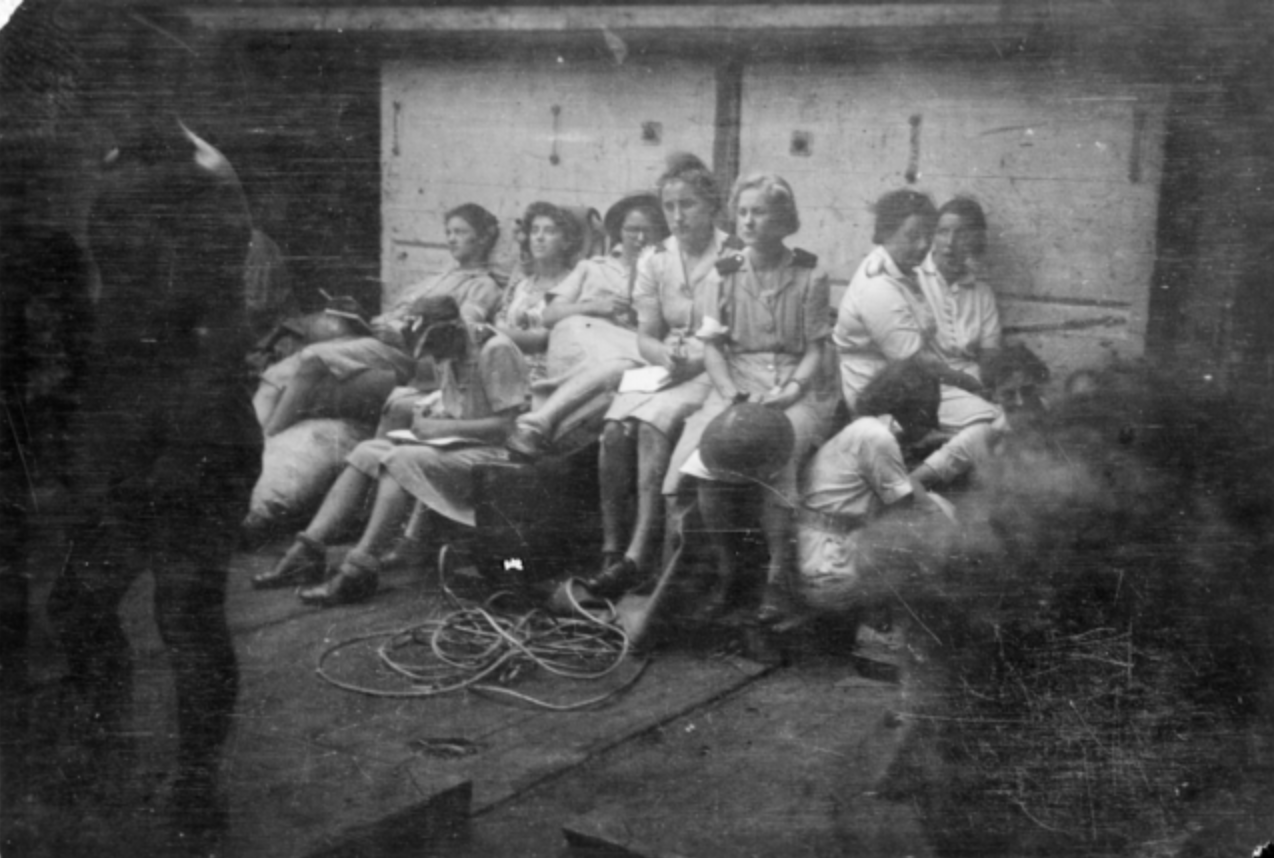
Nurses and physiotherapists in air raid shelter in the hold of the Empire Star following Singapore evacuation, February-March 1942
Soon after leaving Singapore the ship was subjected to a heavy bombing attack. Japanese airplanes scored three direct hits and machine-gunned the decks. Hill provided an account of the attack,
..we heard planes again and the order went round to take cover as the Japs were after us. We lay flat in our hold for four hours while flights of planes numbering in all 60 dive [sic] and high-level bombed us consistently. How we survived it no one understood, least of all the Captain … Fourteen people were killed and twenty wounded, so we organised ourselves into a hospital once more and took 4 hour shifts on duty.”
The ship’s captain, Selwyn Capon, described the nurses and physiotherapists as performing “yeoman service in attending to the wounded.” Despite the attacks and damage, the Empire Star managed to reach Batavia in the Netherlands East Indies (Indonesia) for repairs. The nurses and physiotherapists spent what Audrey described as several ‘fairly peaceful’ days in Batavia before the Empire Star was made sufficiently seaworthy to attempt the return to Australia, finally reaching Fremantle on 23 February 1942.
Notwithstanding the harrowing experiences, when safely back home Hill said,
I wouldn’t have missed one day of our time in Malaya even with the Japs thrown in. It was a marvellous experience (especially now that I know I got through it alright) and all so worth while and full of interest and excitement. The one thing that saddens all our memory of it is that none of our men (M.O’s [medical officers] and orderlies) and only half our girls got out. We have heard nothing of them at all and can only hope that they are altogether and are being allowed to carry on as a hospital – it seems a lot to hope for.”
The Vyner Brooke
The Vyner Brooke was one the last ships carrying evacuees to leave Singapore. Although usually carrying 12 passengers, in addition to her 47 crew, the ship sailed south with 181 passengers, most of them women and children, including the last 65 Australian nurses in Singapore. Throughout the daylight hours of 13 February the Vyner Brooke laid up in the lee of a small jungle-covered island, but was attacked late in the afternoon by a Japanese aircraft, fortunately with no serious casualties. At sunset she made a run for the Banka Strait, heading for Palembang in Sumatra. Japanese warships impeded her progress and daylight on February 14th found her dangerously exposed on a flat sea just inside the strait.
Not long after 2pm the Vyner Brooke was attacked by several Japanese aircraft. She was crippled by bombs and within half an hour rolled over and sunk, bow first. After periods of between eight and 65 hours in the water, approximately 150 survivors eventually made it ashore at Radii Beach, Banka Island.
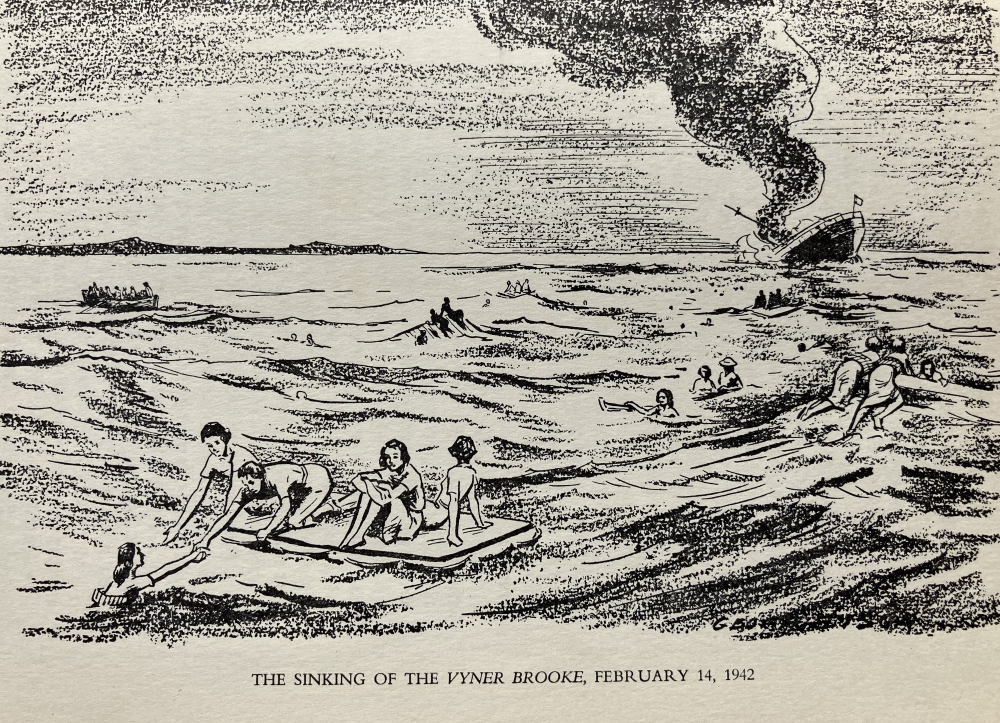
‘The Sinking of the Vyner Brooke, February 14, 1942.’
The survivors joined up with another party of civilians and up to 60 Commonwealth servicemen and merchant sailors, who had made it ashore after their own vessels were sunk. After an unsuccessful effort to gain food and assistance from local villagers, a deputation was sent to contact the Japanese, with the aim of having the group taken prisoner. Anticipating this, all but one of the civilian women followed behind.
A party of Japanese troops walked past the walking group and arrived at Radji Beach a few hours later. They shot and bayoneted the remaining males and then forced the 22 Australian nurses and the one British civilian woman who had remained to wade into the sea, then machine-gunned them from behind. There were only two survivors – Sister Vivian Bullwinkel, and Private Cecil Kinsley, a British soldier. After hiding in the jungle for several days the pair eventually gave themselves up to the Japanese. Kinsley died a few days later from his wounds, and Bullwinkel spent the rest of the war as an internee.
Of the 65 Australian nurses embarked upon the Vyner Brooke, twelve were killed during the air attack or drowned following the sinking, 21 were murdered on Radji Beach, and 32 became internees, eight of whom subsequently died before the end of the war.
Epilogue
Unaware of the tragedy befallen their friends and colleagues, Simpson and Hall continued their Army service back in Australia, rotating through Army General Hospitals in Alice Springs and Katherine in the Northern Territory, and Redbank and Greenslopes, Queensland.
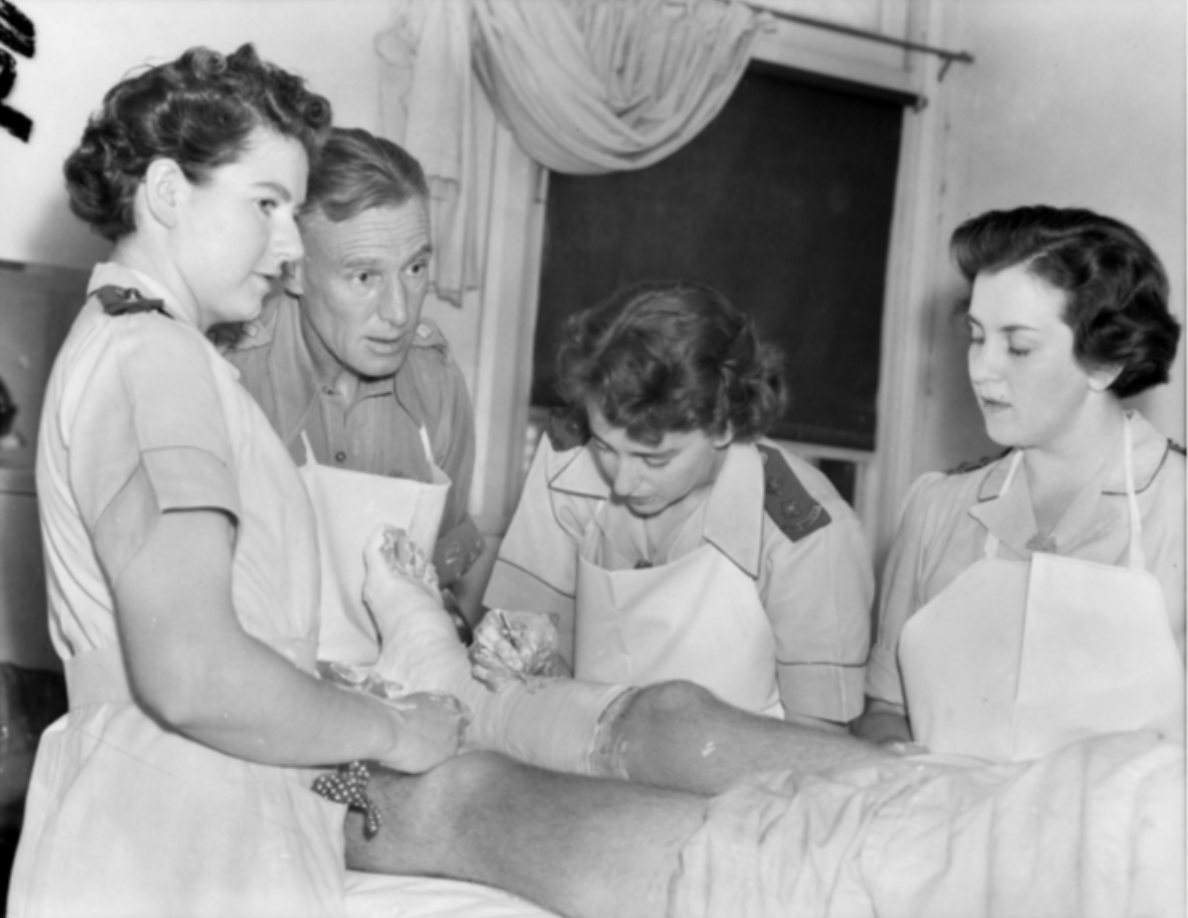
Plaster work: Physiotherapists Audrey Simpson, Marjorie Hill and Nancy Burgess with Capt. M V Samuel, 109AGH, Alice Springs, NT.
Nearing the end of the war Simpson and Hill were shipped out to Labuan, an island off Borneo. By mid June 1945, only a few Japanese snipers remained in the jungle of the island and the way was clear to set up a 600 bed hospital. Tents were erected, then equipment, stores and finally personnel were moved in amid torrential downpours, mosquitos and enervating heat.
The war in the Pacific ended on 15 August 1945. The victory party at 2/4 AGH broke through the floorboards in the nurses’ recreation hut. Most sick and wounded troops were evacuated from the hospital but the respite for the staff was brief. The troops were quickly replaced by emaciated and deprived prisoners of war, many of whom had been captured in the fall of Singapore.
Following their demobilisation from the Australian Army both Simpson and Hall continued working as physiotherapists, and led long lives, passing at 97 and 83 years of age, respectively.
References
Marian March’s News for Women. (1942). Army sisters return home. The Advertiser, 18 March, 5. Accessed online at https://trove.nla.gov.au/newspaper/article/48749089 on 18 February 2026.
Scarfe, J. (Undated). HILL, Marjorie. Website of the Virtual War Memorial Australia. Accessed online at https://vwma.org.au/explore/people/595295 on 17 February 2026.
Scarfe, J. (Undated). SIMPSON, Audrey Katherine Allen. Website of the Virtual War Memorial Australia. Accessed online at https://vwma.org.au/explore/people/595294 on 17 February 2026.
The Sinking of the Vyner Brooke. (Undated). The Australian War Memorial Website. Accessed online at https://www.awm.gov.au/collection/E84734 on 17 February 2026.
