

The original roots of the Chartered Society of Physiotherapy (CSP) in the United Kingdom date back to the foundation of the Society of Trained Masseuses (STM) in 1894. In 1900, the Society was incorporated by the Board of Trade by Licence under the then Companies Act of Parliament to become the Incorporated Society of Trained Masseuses, (ISTM). And in 1920, following two decades of substantial growth and development and a sustained process of debate, negotiation and campaigning the ISTM was granted its Royal Charter to become the Chartered Society of Massage and Medical Gymnastics (CSMMG), which in turn evolved and transitioned to become the CSP in the early 1940s (Jones, 2021; Wicksteed, 1948).
In this paper the granting of the “Royal Charter” to the ISTM is explored and elucidated. The importance, meaning and purpose, the privileges, rights and powers bestowed by a Royal Charter, the background and process of achievement of its granting are also discussed and its content outlined.
What is a Royal Charter?
A Royal Charter is a formal document in which a monarch grants specific rights and powers to a corporate entity officially establishing and recognising the organisation, and outlining its rights, responsibilities and privileges. It is a prestigious recognition of only one organisation in a given field and its granting involves deep and wide-ranging evaluation of an application by petition which must demonstrate its significance, contributions, public interest and role as a leader and is the representative body in its field. An organisation applying for a Royal Charter must demonstrate that it upholds and serves a beneficial role in the specific field.
Royal Charters have legal standing and confer authority and consequently provide a specific framework in which the Chartered organisation or body operates. They are not only granted for professions and institutions but are also used to establish cities, charities, professional organisations and universities.
The use of Royal Charters has spanned around ten centuries, evolving from their early medieval origins. King William I, who reigned from 1066 to 1087, is known to have granted Royal Charters to towns and religious institutions. The Royal Charter which he granted to the City of London in 1067, also known as the William Charter, confirmed rights and privileges following the Norman Conquest and strengthened the continuity of London’s self-governance and economic position. The granting of specific privileges and endowments also consolidated the monarch’s power and influence. A further example of an early Royal Charter is the foundation charter for the town of Ipswich granted by King John in the year 1200, preceding the Magna Carta by fifteen years.
In more recent times some countries that are part of the Commonwealth that recognise the British Monarch as their head of state such as Canada, Australia and New Zealand also use Royal Charters which are generally issued by the monarch on the advice of the government of these countries. And in the past, some European countries such as France, Spain and the Netherlands also granted charters to establish towns, universities or trading companies. Other European countries have also historically used charters to grant rights and privileges or to recognise corporate bodies.
Working Towards the Royal Charter
The First Royal Patron
With regard to public recognition of ISTM an important development was achieved in June 1916 when Her Majesty the Queen (Queen Mary), wife of King George V, consented to become the first Royal Patron of the Society (Wicksteed, 1948); a great tribute and recognition of the ISTM’s work and esteem in which it was held. Upon her death in 1953 the late Queen Elizabeth II consented to become Royal Patron of the Chartered Society of Physiotherapy (Wellcome Collection).
Increasing numbers of Massage Organisations
Whilst the ISTM was by far the largest and predominant organisation in the UK primarily for massage and increasingly other physical treatments such as exercise and electrical procedures, there were a growing number of other organisations presenting competition. These organisations included the National Association of Trained Masseuses and Masseurs Ltd., which had been Incorporated in 1912 (Wicksteed, 1948). However, an earlier application in 1911 for Incorporation by an organisation which proposed to use the title “Manchester and Northern Counties Incorporated Society of Trained Masseuses and Masseurs” was deemed by the Board of Trade illegal on the grounds that the title would lead to confusion. This application had been submitted by a massage teacher who had previously been struck off the roll of membership of ISTM on grounds of serious malpractice but six months later started this new organisation.
Jane Wicksteed (1948), author of the first official history of the Chartered Society of Physiotherapy in her book “The Growth of a Profession” reported:
In order to prevent repetitions of this and similar troubles, the Society‘s solicitor recommended that application be made to the Privy Council for a Royal Charter. A Royal Charter is granted to one Society only in any profession; it therefore constitutes the hallmark and cannot be emulated by other groups in the same field. The solicitor’s advice was not immediately accepted, but again the seed had been sown, a seed that took nine years to germinate!”
A special “Charter Committee” was set up by ISTM in 1914 and later in 1917 was supplemented by an Advisory Board with strong representation from supportive eminent physicians, all of whom later became Chairs of the Chartered Society. The Advisory Board was led by Sir Edwin Cooper Perry (chairman), Dr J B Mennell, Mr R C Elmslie with the support of other well-known medical colleagues; Lucy Robinson chair of the ISTM council, Rosalind Paget the first Chair of the Society of Trained Masseuses and the Incorporated Society of Trained Masseuses. Miss Robinson and Miss (later Dame) Rosalind Paget were the first two founder members of ISTM (Jones, 2021) and other Council members were also members of the Advisory Board at the request of ISTM Council and they met regularly throughout the War years and until the Royal Charter was granted (Wellcome Foundation; Wicksteed, 1948).
Another Society, the Institute of Massage and Remedial Gymnastics, based in Manchester, although a small organisation was generally performing the same sort of professional functions as the ISTM.
A possible solution seemed to be amalgamation of the two bodies, under a new title and with a Royal Charter, and agreement to this proposal was reached after lengthy negotiations between ISTM, through its Advisory Board, and the Institute” (Wicksteed, 1948).
Every item in the proposed Charter and by-laws was eventually agreed by the Councils of both bodies including the title to be adopted for the new organisation.
At an extraordinary Special Meeting on the 29th March 1919 the members of ISTM approved the final details of the Amalgamation with the Manchester Institute and in May the Petition for a Royal Charter was submitted to the Privy Council in the names of the present and past Chairman of ISTM, Evelyn Winifrede Bliss and Lucy Marianne Robinson, and Sir William Milligan, MD, Founder and Chairman of the Institute” (Barclay, 1944).
New Horizons – The Royal Charter is Granted
At an extraordinary Special Meeting on 29th March 1919 the members of ISTM finally approved details of the amalgamation with the Manchester Institute. On the 11th of June 1920 a message was received from the ISTM solicitor that the Charter had been signed by His Majesty the King and the Chartered Society of Massage and Medical Gymnastics came into being. The ISTM and IMRG then went into voluntary liquidation and on 19th June 1920 the ISTM held its last annual meeting. On the 26th July 1920 all members and certificate holders of the former ISTM and IMRG were invited to the Langham Hotel, London to celebrate: “To Greet the Charter and to partake of tea, with fruit salad and ices” (Wicksteed, 1948). At this time, there were approximately 5090 members of the ISTM and 89 members of the IMRG.
On the same day, 26th July 1920, the first Annual General Meeting took place under the chairmanship of Sir Edwin Cooper Perry at the Armitage Hall of the National Institute for the Blind (NIB) in Great Portland Street, London. Many meetings of the Chartered Society took place at NIB, which is an indication of the close working relationship between the two organisations. The Agenda for the meeting (Wellcome Collection) included items on messages of regret for absence, financial statement prepared by the liquidator and a report of the Council.
The Royal Charter comprises 17 pages and is available here; short extracts are reproduced and some of the key points drawn out. As would be expected for a document written in 1920 the language might be described as somewhat arcane and archaic in relation to today’s practice.
Firstly the document introduces His Majesty King George V responding to the petitioners representing the ISTM and IMRG. The document sets out a brief outline of the origins and backgrounds of the two organisations and incorporates the two into one body politic and corporate to be known as the Chartered Society of Massage and Medical Gymnastics (CSMMG)
Powers granted for the acquisition of land and with regard to “all property belonging to” the ISTM and IMRG are stated requiring that any land and property were to be vested (or now owned) by the newly formed Body.
Objectives
The objectives for which the new Chartered Society was established included the amalgamation of the Incorporated Society and the Institute; to improve the training, education and professional status of people engaged in the practice of: “Massage, Medical Gymnastics, Electrotherapeutics, and Kindred methods of treatment”. It was an essential acknowledgement within the Royal Charter, laying down clearly the specific rights and areas of practice granted to the newly formed Chartered Society. Clearly “kindred methods of treatment” permits a very wide range of treatments and techniques and allowed broadening of the services which members could offer and included within the scope and prerogative of the profession. The objectives also incorporated the promotion of a uniform curriculum and standards for qualification including the institution and conduct of examinations and the granting of Certificates of Proficiency, also Diplomas to “persons qualified to practise and to teach the practice of Massage, Medical Gymnastics, Electrotherapeutics or Kindred forms of treatment”. The Royal Charter laid down fifteen clear and specific objectives together with a wide range of other rights, privileges and responsibilities.
The document sets out detailed requirements for the purposes and membership of the Council, the governing body of CSMMG including numbers and qualifications of Council members, categories of representation, term of office and Committees.
The categories of Council membership are presented including the named members of the first Council. The categories and numbers stated were:
- Six Honorary Members – Four founders of the former Incorporated Society and two members of the former Institute. Of the four former ISTM one was Rosalind Paget and a second Lucy Robinson the first two Founders in 1894.
- Sixteen Elected Members including “eight teachers in recognised Schools” and “eight non-teachers. Of the sixteen Elected Council Members fifteen were women and one man. The male member was the Principal of the National Institute for the Blind later the RNIB School of Massage, Mr. Percy Linney Way, himself a blind man.
- Eight Co-opted Members. The list of eight co-opted members shows the names of seven eminent doctors including Sir Edwin Cooper Perry, M.D. who became the first Chairman of the Chartered Society (1920-1929). He had given much time and guidance as Chairman of the ISTM Royal Charter Advisory Board leading up to the preparation of the submission of the Petition for a Royal Charter.
The only non-medical man on the Co-opted Members of Council list was Sir Cyril Arthur Pearson, Bt., GBE. Sir Arthur (as he was known) was Chairman of the National Institute for the Blind School, also Chairman of St. Dunstans (the organisation for blinded ex-servicemen) and co-opted on to the ISTM as financial advisor. He had been a newspaper magnate, a founder of “Express” newspapers from the early years of the 20th century and had lost his sight in the early teens of the century (Jones, 2021) .
The Chartered Society placed a heavy reliance on the co-opted members for guidance in the early days following the granting of the Royal Charter; they brought a wealth of experience, business acumen and expertise and their patronage added much to the direction and management of the Chartered Society. Arguably, this would also have strengthened Government, medical profession and public confidence in the standing and professionalism of the Society. It is a paradox that it was not until the early 1970s that the Society had developed along the continuum of professionalisation to elect the first Chartered Physiotherapist (Lois E. Dyer) to lead the Society as its Chair.
The contents of the Royal Charter also includes rights and privileges on, for example, the constitution and formation of Local Boards of the Chartered Society, Audit and Annual Reports, expulsion of Members and powers to make Bye-Laws and the requirements for the conduct of meetings, Minutes and finances.
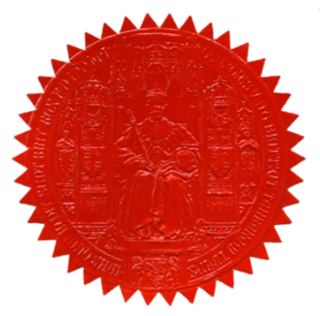
The Royal Charter was signed by the King and includes the Royal Seal and this is displayed at the head of this paper. The remaining ten pages of the document relate mainly to the By-laws and governance of the Chartered Society.
Conclusion
Undoubtedly, the granting of the Royal Charter was a very significant landmark in the development and professionalisation of physiotherapy in the UK. The Royal Charter was an important mark of official recognition and prestige; recognising and acknowledging the Society as an authoritative and legitimate organisation in its fields of practice. The Charter elevated the status of the profession, recognising the professionalism of its members, having the autonomy to govern and regulate itself including the setting of high standards of training and education, practice, ethical conduct and service ethic. It enhanced public trust and reinforced a framework of accountability. The granting of Royal Charters has a long history within a tradition of organisations and institutions granted similar status, with a commitment to providing high quality caring service to the population as a whole on a collective and individual basis as well as advocacy for members of its own profession.
References
I acknowledge and thank the Wellcome Foundation, London for assistance and access to the CSP archives.
Jones, RJ. (2021). Blind and Partially Sighted Physiotherapy in the United Kingdom. A Century of Development, Success and Challenge. Will it still belong? Physiotherapy Theory Practice, 37(3), 401-419.
Wellcome Foundation, London. Handwritten and typewritten official papers, minutes of meetings, correspondence and notes held in the CSP Archive.
Wicksteed, JH. (1948). The Growth of a Profession London: Edward Arnold
Barclay J (1994) In Good Hands. Butterworth-Heinemann: Oxford.
Young, P. (1969). A Short History of the Chartered Society of Physiotherapy. Physiotherapy, 55(7), 271-278.
