
Category: Research
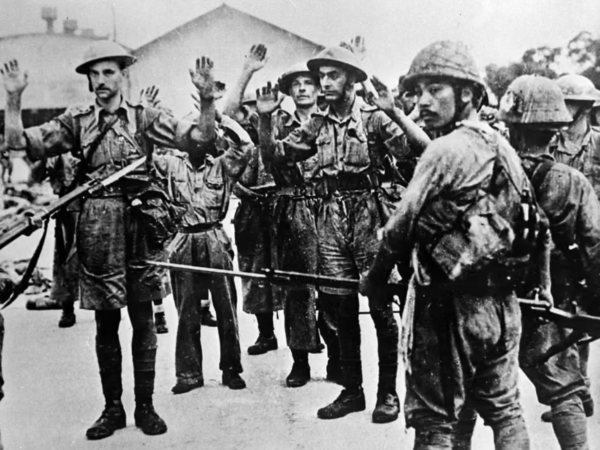
The Fall of Singapore
Following the First World War, Australia concluded that Japan’s expansionist ambitions in the Pacific posed the greatest threat to its national security. Britain was equally determined to protect its Asian territories — India, Burma, Malaya and Hong Kong — from Japanese encroachment. The Singapore Strategy In 1919 Singapore, strategically positioned …
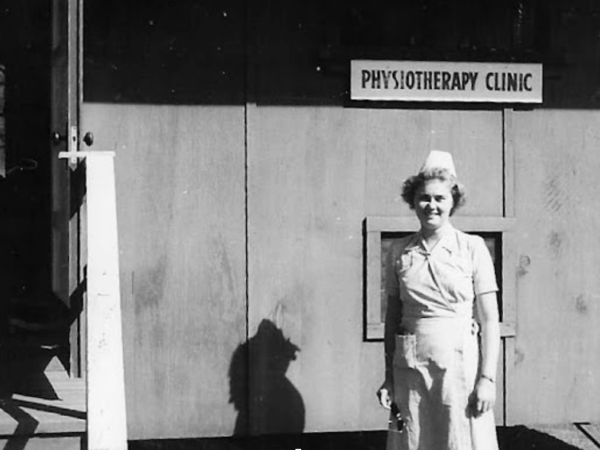
How US Army Physical Therapy Pioneered Direct Access
The untold story of how war, necessity, and innovation transformed physiotherapy forever. When today’s US physical therapists evaluate a patient without a referral, few realise that the roots of this autonomy stretch back to the battlefields of the 20th century. Long before “direct access” became a catchphrase for professional independence, …
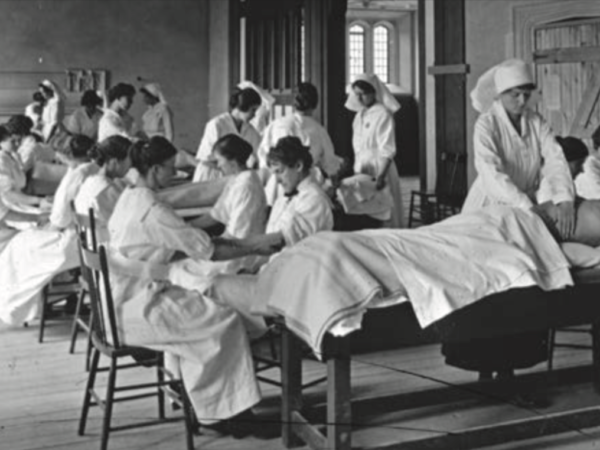
The Waning Touch of Massage
As old as humanity, massage reached its peak or ‘golden age’ in a seventy year period from the late 19th century through to the mid 20th century. Its rise is often attributed to Swede Pehr Henrik Ling, hence the term ‘Swedish Massage’, but it is more reliably attributed to Dutchman …
James Cyriax: Villain or Hero?
James Henry Cyriax was born in London in 1904 into a distinguished family of gymnastic directors — Swedish educated physiotherapists who combined physical education and manual therapy. His maternal grandfather, Jonas Henrik Kellgren (1837–1916), was a renowned figure at the Royal Central Institute of Gymnastics (RCIG) in Stockholm. Kellgren had …
The Power of Historical Narratives
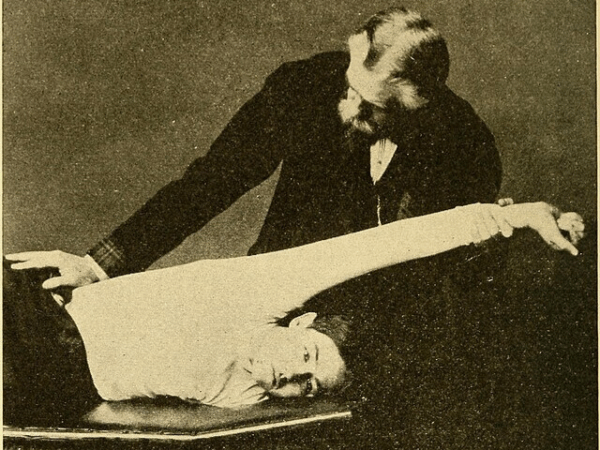
I had the good fortune to present recently at the AAOMPT conference in Reno, Nevada. The topic at hand related to how the modern scientific focus in physiotherapy is both strengthening our understanding of the mechanisms of manual therapy but weakening the standing of manual therapy compared to non-hands-on approaches. …

Earthquake in Pakistan
On the 20th Anniversary, a review of the impact of the 2005 earthquake on the physiotherapy profession in Pakistan. On 8 October 2005 an earthquake of magnitude 7.6 points on the Richter scale shook the hills and mountains of Azad Jammu and Kashmir in Pakistan. This devastating event was a …
The Swedish Golfing Society
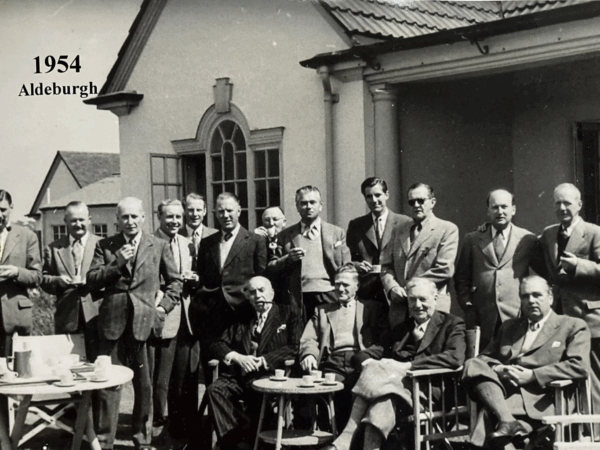
On the evening of 26 March 1912, twelve Swedes met at the Golfers’ Club in Whitehall Court, London. They were invited to the meeting by Detlof von Braun to discuss the formation of a Swedish Golfing Society. At the time interest in sport was ever increasing. The previous Olympic Games …
Swedish Gymnastics at the Olympic Games
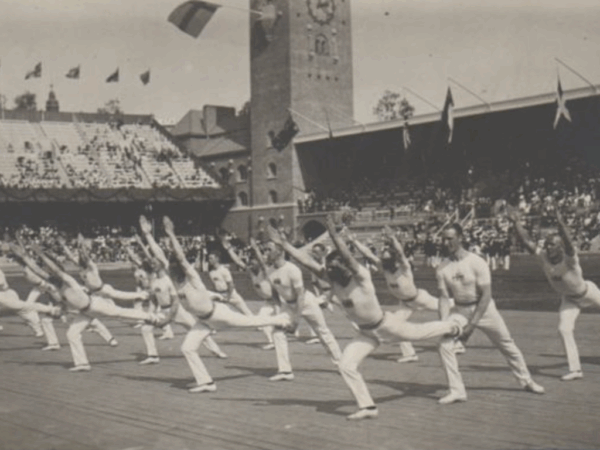
The Swedish gymnastics of Pehr Henrik Ling consisted of four branches: military (fencing), medical (physiotherapy), pedagogical (physical education) and aesthetic (dance). For the latter two, the system emphasised floor exercises along with “Swedish bars” (attached to a wall), balance beam, vaulting box and some hand-held apparatus. The movements were generally …
Physiotherapy’s First War
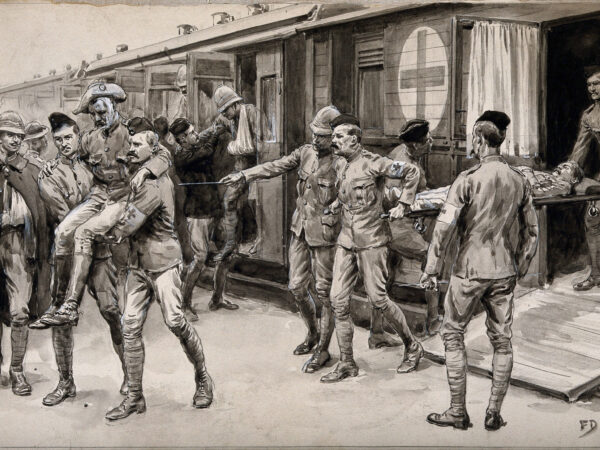
The First World War is considered the turning point for the institutionalisation and expansion of the physiotherapy profession. The sheer volume of injured personnel created by the mechanisation of arms, combined with emerging government social responsibility, facilitated support for a workforce trained to assist in physical rehabilitation. But the First …
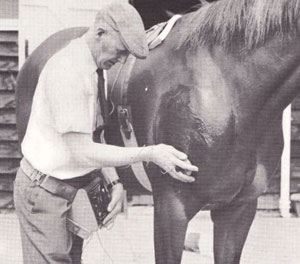
Animal Physiotherapy
Animal physiotherapy began with surprising enthusiasm, supported from its earliest days by none other than Lord Mountbatten (1939). It began to gain recognition and caught the attention of visionary therapists and forward-thinking institutions who believed that animals, too, could benefit from physical rehabilitation. Thanks to figures like Sir Charles Strong …