

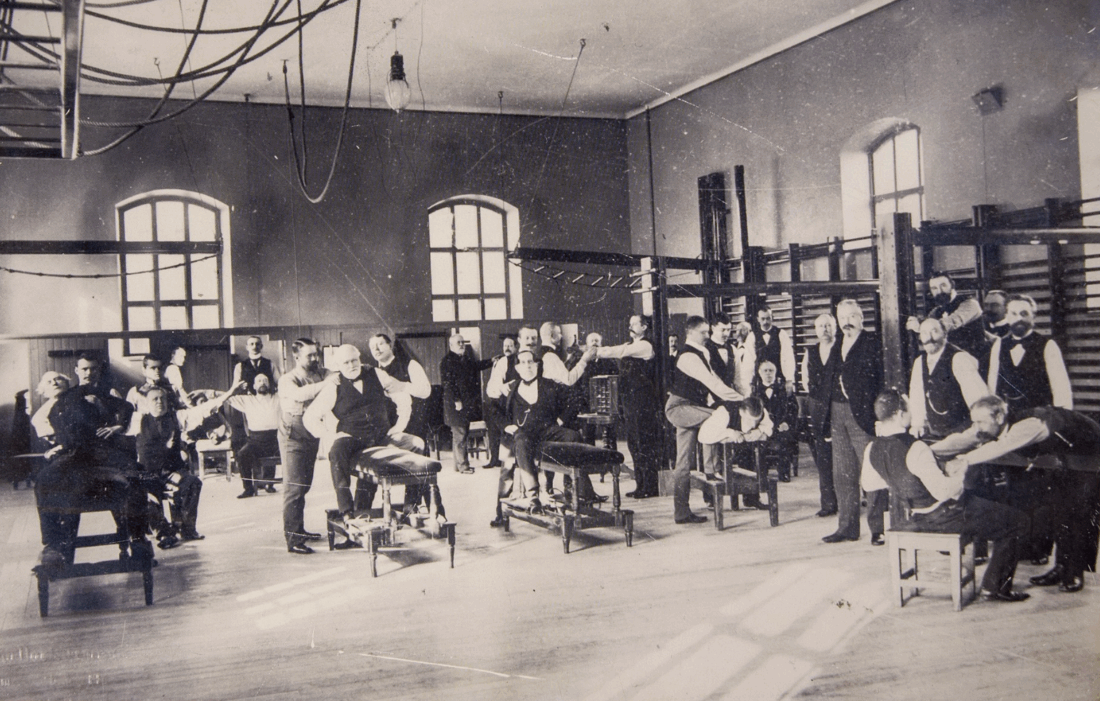
In a newly published book, titled The Lost Origins of Osteopathy and Chiropractic in European Mechanical Medicine and Physical Education, C. 1800-1950 author Anders Ottosson argues that osteopathy, chiropractic, orthopaedic medicine and orthopaedic manual physical therapy all have a common origin – early Swedish physiotherapy.
Whilst manual therapy is as old as mankind, the 19th century saw new healthcare professions arise as the demand for healthcare services dramatically concomitantly increased with higher incomes. Osteopathy and chiropractic both emerged in the United States at the end of the 19th century with their founders claiming that most diseases were caused by dislocated joints, particularly in the spine. Since the germ theory of diseases was already well-accepted by then, these etiological models were dismissed by orthodox medicine as unscientific.
Because historians and sociologists of medicine had not found parallels in contemporary European medical thought and practice, osteopathy and chiropractic were long regarded as uniquely American phenomena. Ottosson seeks to challenge this assumption by showing that both have strong European roots.
Drawing on previously unexplored sources and new theoretical approaches, he traces osteopathy and chiropractic back to a very influential 19th-century European discourse of mechanical medicine, which also spread to North America and the colonial world. The core principle of mechanical medicine was that many chronic and internal diseases could be cured or alleviated through specific movements and massage-like techniques. Physicians and other practitioners at the time considered these methods to have solid scientific merit.
The strongest roots of osteopathy and chiropractic, Ottosson argues, lay in Sweden – specifically at the Royal Central Institute of Gymnastics (RCIG), founded in Stockholm in 1813. Ottosson even identifies an alumnus of the Institute as a clear forerunner: the physiotherapist Lieutenant Henrik Kellgren (1837–1916).
Ottosson said,
What first caught my attention was a biography of Mark Twain that mentioned the Twain family seeking out a ‘Swedish osteopath’ in England named Kellgren. Twain’s own correspondence later revealed that he considered osteopathy to be ‘a steal’ – an American imitation of Kellgren’s methods. After reading that, I was hooked.”
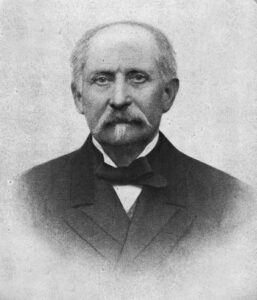
Henrik Kellgern, 1908, Wikidata.
Kellgren’s large London clinic attracted patients and practitioners from all over the world. He also operated a well-known health resort in Sweden, where the Twain family stayed in the summer of 1899. Yet today, Kellgren and his manual system is forgotten. Ottosson explores how and why even scholars actively searching for the origins of osteopathy and chiropractic could not find him.
“The short version,” Ottosson explains,
is that Kellgren was overshadowed by emerging professional interests in the rapidly expanding healthcare sector, which wanted to appear independent of him. In the United States, osteopaths and chiropractors, and in Europe, physicians (especially orthopaedists), physiotherapists, and physical educators were all complicit in removing Kellgren and the Royal Central Institute of Gymnastics from the historical record, so to speak.”
Ottosson’s evidence is drawn from the early strategic changes by the osteopathy profession (which preceded chiropractic), in response to being confronted with Kellegren’s work, not least via the doctoral thesis of Kellgren’s brother, Arvid Kellgren, also a physiotherapist and a medical practitioner.
Ottosson also said,
That Andrew Taylor Still and Daniel David Palmer successfully contrived their systems in the rural mid-west of America is likely due to the lack of mechanical-medical practitioners available in those rural areas to call them out. It is very likely that Osteopathy and Chiropractic would not have succeeded had they been formed on the more populated East Coast where the Royal Central Institute of Gymnastics and Kellgren’s system were well known by practicing physiotherapists and physicians”.
Furthermore Ottosson explores the origins of orthopaedic medicine and identifies how it arose in response to osteopathy and chiropractic spreading to Europe in the early twentieth century. Dr James Cyriax sought to counter the American interlopers, not by relying on Kellgren’s name (who incidentally was his own grandfather) but by referencing physician’s scientific studies of the older bonesetters. This strategy created a new field within medicine, rather than potentially giving credibility to the physiotherapists (and Kellgren) with whom orthopaedics had battled for the previous fifty years. Ottosson even likens the actions of Dr James Cyriax with a “successful historical patricide”.
The study offers new insights into how professional boundaries between orthodox and alternative medicine were drawn at the turn of the 20th century, and will contribute to a stronger understanding of the history of the physiotherapy profession.
Anders Ottosson’s study is published by Routledge: The Lost origins of Osteopathy and Chiropractic in European Mechanical Medicine and Physical Education, c. 1800-1950
References
University of Gothenburg. (2025). Sweden’s global influence on the expanding healthcare sector highlighted in new historical study. Accessed online at https://www.gu.se/en/news/swedens-global-influence-on-the-expanding-healthcare-sector-highlighted-in-new-historical-study on 4 October 2025.
