

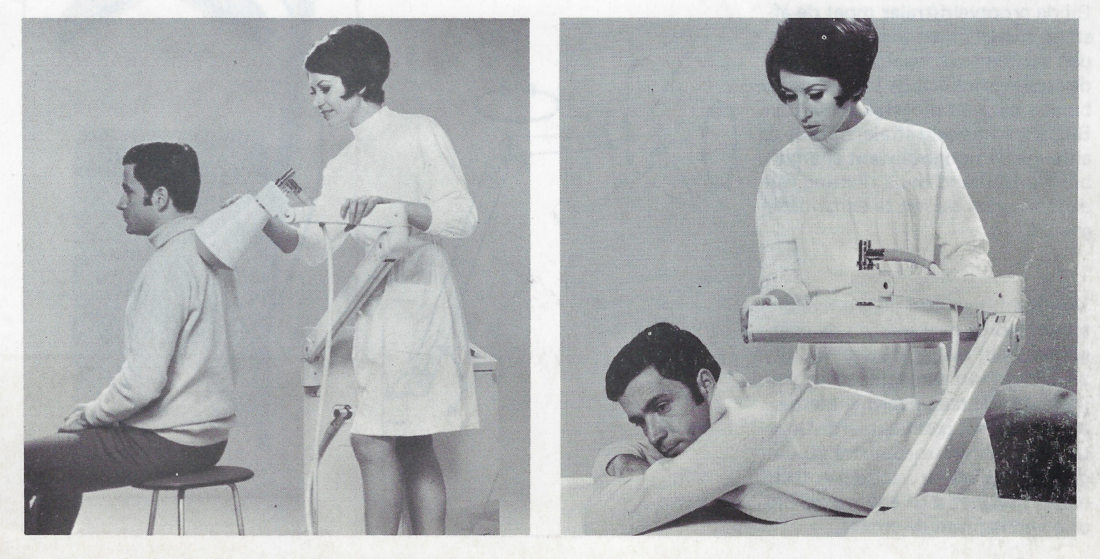
Physical technique as a treatment method in physiotherapy: from core component to peripheral phenomenon. Report of the first witness seminar on physiotherapy.
Original article provided in Dutch. Translated by Claude.ai
Authors: Heleen Beckerman, chair of the witness seminar on Physical Technique; Anton de Wijer, initiator and organiser of the witness seminar, chair of the Foundation for the History of Physiotherapy from 2015 to 2023; and Ronald Valk, curator of the Foundation for the History of Physiotherapy.
Physical Technique (also known as physical therapy in the strict sense) is the sub-field within physiotherapy that focuses on treating complaints and conditions of the musculoskeletal system using physical stimuli. These are non-invasive, external applications of physical energy sources, such as:
- Electrical current (electrotherapy, TENS, iontophoresis)
- Heat and cold (thermotherapy, cryotherapy)
- Light (infrared, ultraviolet, laser therapy)
- Water (hydrotherapy, balneotherapy)
- Mechanical vibrations (ultrasound therapy, shockwave)
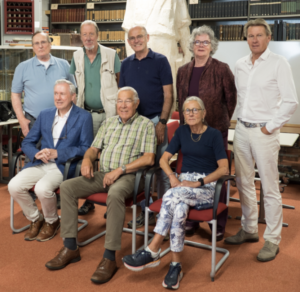
Witness Seminar Participants
The history of physiotherapy in the Netherlands is inextricably linked to the development and application of physical technique. On 23 June 2025, Antoinette Müller-van den Berg, Henk van Zutphen, Ron Allard, Geert Aufdemkampe, Gerard Koel, Frits Oosterveld, Anton de Wijer, and Heleen Beckerman (chair) gathered in Urk, the Netherlands, for a witness seminar, organised by the Foundation for the History of Physiotherapy.
A witness seminar is a form of scientific research into the past through the systematic collection and recording of individual recollections of an event or period in time (de Wijer & Vossen, 2021). This witness seminar involved discussion of recollections of physical technique in Dutch physiotherapy from 1965 onwards.
Historical context
After a cautious introduction of physical technique in the Netherlands at the beginning of the 20th century, an announcement appeared in 1948 in the Journal of Remedial Gymnastics, Massage and Physiotechnics stating that remedial gymnasts with demonstrated aptitude were permitted to apply physiotechnics. Formal recognition of physical technique as part of the physiotherapy domain came with the Physiotherapists Decree (11 February 1965), a follow-up to the Act on Paramedical Professions (1963).
Physical technique encompassed low- and high-frequency electrotherapy, thermotherapy, light therapy, and hydro- and balneotherapy. In the decades that followed, physical technique was widely taught and applied, partly thanks to a strong orientation towards German-language literature and the development of a dedicated Dutch textbook.
The national professional association, the Netherlands Society for Physiotherapy, facilitated education for remedial gymnasts and organised additional examinations in Physical Technique until 1975. Examinations were held three times a year at various hospitals across the Netherlands. The 1970s and 1980s were characterised by strong substantive and educational development of Physical Technique, partly driven by a national working group of Physical Technique lecturers. The expertise development within this educational working group led to harmonisation of teaching across all universities of applied sciences and the publication of the Dutch Textbook of Physical Therapy in the Strict Sense (van Zutphen et al., 1982; 1987). Physical technique was during this period a natural component of physiotherapy training and practice.
A Turning Point: Evidence-Based Practice and Economic Pressure
From the 1980s and 1990s onwards, the physiotherapy landscape changed significantly. The rise of evidence-based practice (EBP) and the growing emphasis on scientific substantiation of treatments led to critical evaluation of physical technique (Beckerman & Bouter, 1991; Bouter et al., 1992). For many physical applications, insufficient evidence of effectiveness was found. Earlier still, the health insurance system had been adjusted for economic reasons, making the application of physical technique in primary care less attractive. The fee-per-procedure tariff was changed to a fee-per-session tariff. Sweeping changes in education soon followed, including the phasing out of many physical applications from the curriculum and from physiotherapy practice. Physical Technique increasingly became a peripheral phenomenon.
The disappearance of physical technique has led to a fundamental change in the profession of physiotherapy, and a generation of physiotherapists who are barely proficient in physical technique. Where the physiotherapist was once seen as a practitioner with a broad arsenal of physical interventions, today’s physiotherapist has once again become a ‘remedial gymnast’ — albeit with a current body of knowledge and skills relating to movement. With the disappearance of physical technique, a great deal of fundamental and specific (patho-)physiological tissue knowledge has been lost, meaning that certain physiotherapy indications may currently be treated sub-optimally.
The first witness seminar on the history of physical technique offers valuable lessons for the profession and for physiotherapy education. These lessons invite a critical, innovative, and context-sensitive approach to the practice of physiotherapy. The full report (including references) in Dutch is available here.
The Foundation for the History of Physiotherapy intends to organise a series of comparable witness seminars on physiotherapy. By combining the best of the past with the present, physiotherapy can maintain and strengthen its position as a valuable, broadly applicable discipline.
Correspondence address: adewijer@gmail.com
