

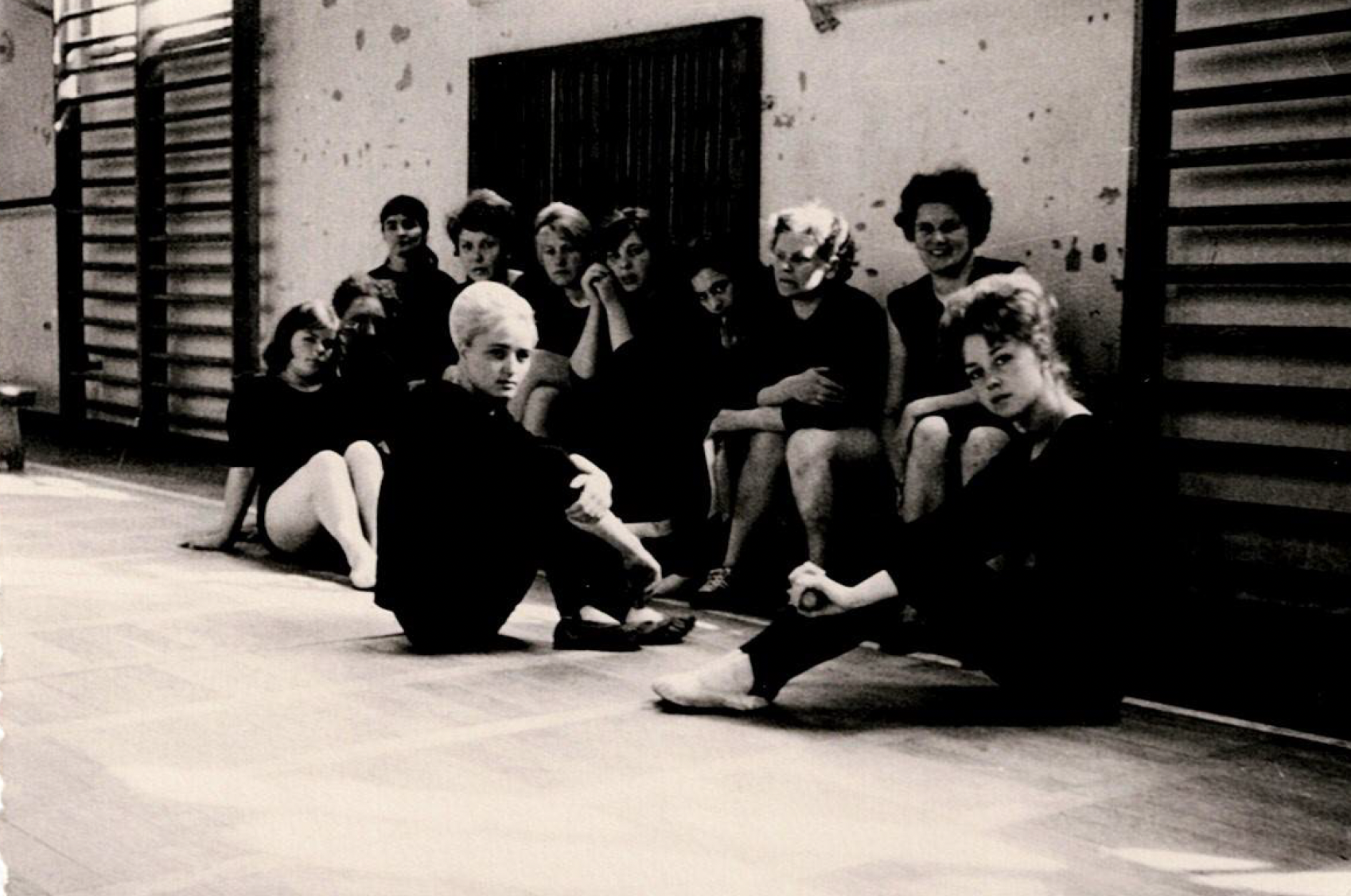
My vocational training as a physiotherapist in the German Democratic Republic (GDR) offered me my first internship in 1968 at a Saxon Thermal Bath, a leading spa facility in the GDR for rheumatic diseases, specialising in ankylosing spondylitis, but also in the late effects of polio.
In the physiotherapy department, the head physiotherapist approached me – a pleasant first word! She introduced me to her colleagues and then to some of the patients, welcoming me as a new intern in a friendly manner. The tour through the large and well-equipped rooms was thorough, as she explained the procedures.
I also clearly remember my first patient encounter: A patient with ankylosing spondylitis, sitting in a wheelchair, hunched over due to his deeply rounded back, his hands resting on his lap, supporting each other. He looks at me slightly askance and raises a hand in a friendly greeting. He nods to his physiotherapist for permission to share his medical history with me. He himself is a doctor by profession. He has been coming to this thermal spa for many years to counteract the progression of his flexed, stiff back. Mud packs, massages, passively guided stretching movements, and positioning help him. With active physiotherapy, he maintains an active range of motion.
I first watch the treating physiotherapist perform a classic massage. Then there is time in the ward room to explain the nature of the treatment goals. And the next day, I am certain that the patient is willing to receive the massage from me as a “learning physiotherapist”. But first, careful preparation means a lot to me. So, during this first internship, I experience the following sequence: The lead physiotherapist first offers me some massage techniques on my back. She shares her experience and technical “tricks” with me through the practical experience of her massage structure and grip technique. Then I’m allowed to try out some of the techniques on her. I grasp the massage a little shaky and cautiously. When she says I have a good grip and can trust my technique, I grip a little more firmly. Her confirmation is motivating for the first patient contact – it was helpful from the very beginning. She also taught me how to communicate with the patient in a way that allowed them to express whether, for example, they felt the massage stroke was too strong or too weak. She placed particular emphasis on careful grip technique and slowly executed strokes. She believes that massage is primarily effective without many words. This first start conveyed a sense of goodwill toward me as an intern. The guidance in terms of technique built confidence in my own abilities. I was able to build on this later in the internship to reflect on the experiences with the lead physiotherapist in such a way that key insights from this first practical experience remained in my memory.
Every physiotherapist certainly has such a first memory of working with a patient. It’s something unforgettable for one’s professional identity. In my professional work, classical massage has never been merely a “passive method” for me, but rather a “bridge” to the patient and to further therapy. In the professional fields of psychosomatics and psychiatry, I viewed massage as an intermediate step toward the own, activating independence. However, it could also sometimes serve as a foundation for trust in the working relationship between therapist and patient. For patients who fear closeness, maintaining a respectful distance from touch can gradually develop a gateway to health through the design of permissive massage. After many years, spanning decades, in the diverse fields of physiotherapy, I see massage as a relevant, body-oriented bridge, providing clarity of roles between physicians and practitioners. It is a key to “healing communication.”
