

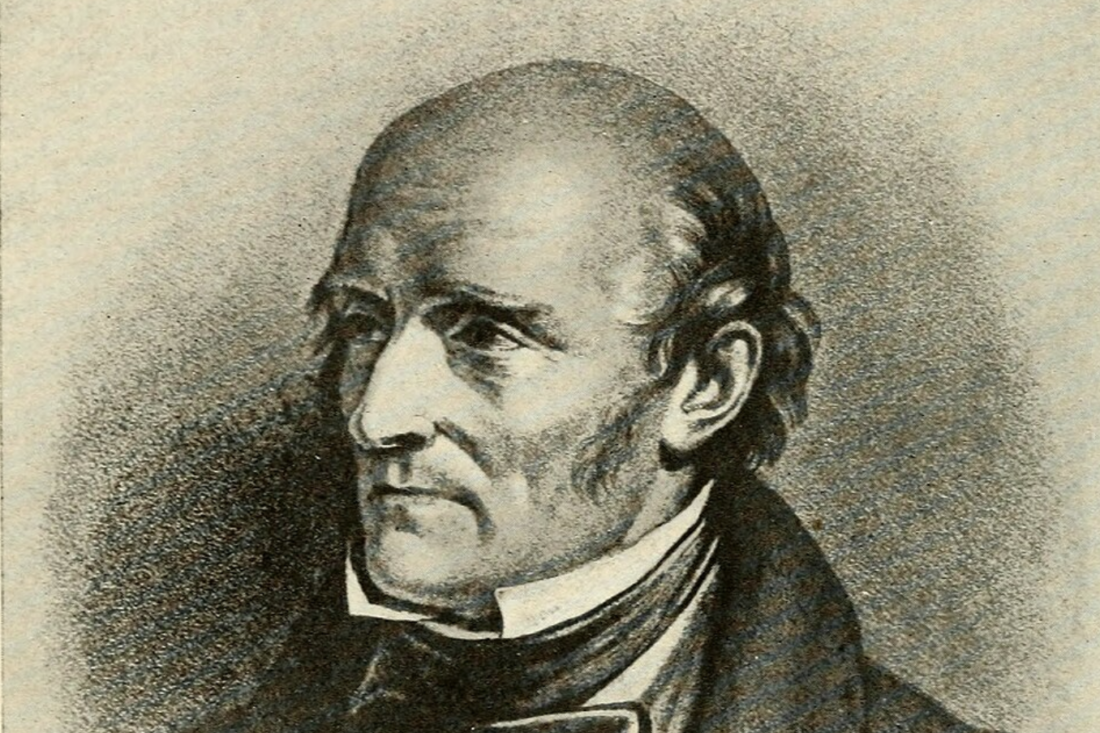
Today is the 250th anniversary of the birth of the Pehr Henrik Ling. Ling developed a systematic approach to physical exercise known as the Swedish system of gymnastics. The approach was based on anatomical and physiological principles and the laws of human movement aimed to improve health, physical function, posture, strength, mobility, and overall physical development.
Honouring a milestone
The International Physiotherapy History Association recognises Ling’s significant contributions and lasting influence on the development of the physiotherapy profession. Acknowledging his historical role as a founder of Physiotherapy, we seek to celebrate his legacy and explore the impact of his work on the evolution of therapeutic exercise and modern physiotherapy.
To honour this special milestone of his birthdate, we invited relevant historians from around the world to share their perspectives, reflections, and insights on Ling’s contributions and enduring legacy in the history of our profession. Six historians answered our call and we will be releasing one of their seven different perspectives on Ling’s legacy every week for the remainder of the year.
Andreas Ottosson is a Swedish historian and senior lecturer at the Department of Historical Studies, University of Gothenburg, Sweden. He is an internationally recognized researcher in the history of physiotherapy, medicine, orthopaedics and physical education
Hans Boling is a Swedish sports historian associated with Stockholm University. His work is associated with the history of sport and physical education
Jens Ljunggren is a Swedish historian and Professor of History at Stockholm University, Sweden. He specializes in the history of sport, masculinity and political emotions.
Leonard Goldstone is a British academic, retired professor and researcher whose later scholarly work has focused on the history of massage and its relationship with medicine and rehabilitation.
Glenn Ruscoe is an Australian physiotherapist, amateur physiotherapy historian, and founding member and current Chairman of the International Physiotherapy History Association.
Cameron McDonald is an American physical therapist, academic and researcher specializing in musculoskeletal physiotherapy, manual therapy and the history of physical therapy. He is associated with Regis University in Denver, Colorado, and the University of Newcastle in Australia. He is also a founding member and executive committee member of the International Physiotherapy History Association.
Ling’s System
Ling’s lifetime coincided with the emergence of modern anatomy, physiology and systematic physical education in Europe. While his work helped establish an institutional and therapeutic tradition that influenced the subsequent development of physiotherapy, his legacy is much greater. Ling’s Swedish Gymnastics, was based on four principal branches, which we briefly explore below:
1. Military Gymnastics
This was the hook that stimulated government support for Ling’s creation of the Royal Central Institute of Gymnastics (RCIG) in 1813. Earlier Swedish military losses were blamed on physical de-conditioning of the population and a national school to train military physical trainers was sought. The Institute attracted many officers from the upper classes and aristocracy, and their patronage provided great support to Ling’s system.
2. Educational Gymnastics
Exercises designed to promote physical development, coordination, posture, and movement. This was the pre-cursor to the development of physical education, primarily for children and especially amongst girls.
3. Medical Gymnastics
Therapeutic movements and exercises intended to improve physical function and help treat physical impairments. This was an incidental occurrence following exercise, yet became the greatest contributor to Ling’s success. it was a pre-cursor to the physiotherapy profession.
4. Aesthetic Gymnastics
Movements emphasising harmony, expression, and graceful body movement. A lesser recognised component of Ling’s system. May be seen through to today in women’s artistic gymnastics and rhythmic gymnastics.
Graduates of the RCIG were effectively ‘double qualified’ to work in physical education and physiotherapy.
Physiotherapy
As mentioned above, the development of modern physiotherapy is strongly influenced by the work of Pehr Henrik Ling. His historical importance lies in his contribution to transforming gymnastic exercise into an organised system of physical education and therapeutic intervention. His approach, described as Swedish gymnastics or more tellingly, medical gymnastics, became a founding pillar of physiotherapy practice during the nineteenth century.
Ling’s influence became particularly evident after his death in 1839. His students and successors continued developing his system, adapting it to medical needs and expanding its therapeutic applications. Among the important figures were Ling’s son Hjalmar (1820-1886) who founded Swedish School gymnastics and systematised his father’s ideas, Lars Gabriel Branting (1799-1881) who most developed the physiotherapy element of Ling’s work, and Carl August Georgii (1808-1881) who significantly spread Ling’s physiotherapy across Europe.
During the nineteenth century, medical gymnastics increasingly incorporated massage, passive movements, active exercises and therapeutic manipulations. Ling’s student Henrik Kellgren progressed the passive manual therapy practices to such an extent that his work is credited with being the impetus for the foundation of osteopathy, chiropractic, orthopaedic medicine and orthopaedic manual physiotherapy (Ottosson, 2026).
Global spread
Ling’s influence can be seen to be both extensive and difficult to unravel. Stockholm was the centre of genesis for what was known as Swedish Medical Gymnastics, Ling Gymnastics or the Movement Cure. The development of this approach was focal to the pedagogical development of a combined gymnastics and hands-on manual therapy system (Ottosson, 2011). The approach, developed and formalised in 1813 in Stockholm, was the catalyst for numerous individuals who would go on to evangelise this unique form of medical gymnastics across Continental Europe, the United Kingdom, Russia, North and South America, Australia and beyond. His legacy was extended by acolytes such as IGI de Betou (de Betou, 1842), Charles Ehrenhoff (1850), Augustus Georgii (1850), and Nils Posse (Leonard, 1927).
Spreading first to continental Europe but coming up against medical resistance, Ling’s approach ultimately found fertile ground in the United Kingdom. De Betou (1810-1857), was first to move to England in 1838, quickly joined by Ehrenhoff. Both provided Swedish gymnastics clinics in prestigious ‘medical’ areas of London, and wrote short books, (de Betou, 1842; Ehrenhoff, 1850) on Ling’s gymnastics. De Betou was congratulated for his book by the King of Sweden.
Augustus Georgii, a practitioner very close to Ling, follwed and ultimately stayed in London for 28 years. He received and mentored, in increasing numbers, many new London contemporaries, especially Hungarian physician Mathias Roth (1860). Roth provided education to many students, locally and internationally, including two of his own sons.
European Baron Nils Posse (1862-1895) migrated to the USA in 1885. Posse, aged 25, was a graduate of the RCIG with significant history in gymnastics, fencing, rowing and ice-skating. Promoted by wealthy sponsors, Ling training courses for public school teachers were funded, as were Ling teachers in schools; and major US government events were enabled for Posse (Leonard, 1927). In 1890 the Ling system was introduced into all Boston public schools, and Swedish gymnastics spread to 52 cities and towns in the USA, private academies, and Boston hospital clinics. Posse published manuals and guides, contributing to the Ling legacy.
Ling’s system further spread with European colonisation, to locations as far form Sweden as Mexico, Argentina, Australia and South Africa. Eventually a merger of Swedish gymnastics and massage occurred, as seen in the naming conventions of the early 20th century of the Chartered Society of Massage and Medical Gymnastics (UK), Canadian Association of Massage and Remedial Gymnastics and the South African Society of Massage and Medical Gymnastics (Ruscoe, et al, 2024).
Conclusion
Ling’s approach occurred externally to medicine and was then brought into medical care in part, and maintained outside of medical practice as well. By the time of the formation of the physiotherapy profession, Swedish trained and influenced educators and evaluators were a critical component of the genesis of the profession (Wicksteed, 1948)
It is reasonable to conclude that as far as one may step away from Sweden and the early 19th century, in looking at the formation and development of physiotherapy, a constant finding is Ling. Over the following weeks we will be exploring Ling’s extraordinary legacy, primarily for physiotherapy, through the eyes of six different historians.
Acknowledgements
Written by IPHA Executive Committee members Magda Fourie, Esther-Mary D’Arcy, Snjezana Schuster and Ximena Suarez Bonilla.
Special appreciation is extended to the six historians, whose knowledge, insights and contributions provided the primary source of information underpinning this document. Their willingness to share their expertise and historical knowledge has been invaluable to its compilation.
References
de Betou IGI. (1842). Therapeutic Manipulation or Medicina Mechanica. London: Simpkin Marshall.
Ehrenhoff C. (1845). Medicina Gymnastica or Therapeutic Manipulation. London: Masters.
Georgii A. (1850). A Few Words on Kinesipathy or Swedish Medical Gymnastics. London: Hippolyte Bailliere.
Georgii A. (1852). The Movement Cure. H. Baillière.
Goldstone LA. (2024). Essays on Massage History. 1750-1950. Shrewsbury: Youcaxton Publications.
Hartwell EM. (1896). Peter Henry Ling, the Swedish gymnasiarch. American Physical Education Review, 1(1-2), 1-13.
Leonard FE. (1927). A Guide to the History of Physical Education. Philadelphia: Lea and Febiger.
Ottosson A. (2011).The Manipulated History of Manipulations of Spines and Joints? Rethinking Orthopaedic Medicine Through the 19th Century Discourse of European Mechanical Medicine. Medicine Studies, 3(2), 83-116.
Ottosson A. (2026). The lost origins of osteopathy and chiropractic in European mechanical medicine, c 1800-1950. Routledge.
Roth M. (1860). Notes on the Movement-Cure, or, Rational Medical Gymnastics: The Diseases in Which It Is Used, and on Scientific Educational Gymnastics. London: Groombridge & Sons.
Ruscoe GA, Schiller S, Jones RJ, MacDonald CW & McGrath RL. (2024). Physiotherapy: the history behind the word. Physiotherapy Theory and Practice, 40(11), 2469–2471.
Wicksteed J. (1948). The Growth of a Profession. Being the History of the Chartered Society of Physiotherapy. 1894-1945. London: Edward Arnold & Co.
