The Lingiad
An international gymnastics display, with 7,399 participants from twelve countries, was held in Stockholm in 1939 to commemorate the centenary …
Understanding how manual therapy techniques evolve over time deepens our grasp of clinical reasoning and safe application. Lumbar shift correction, …
Arvid Kellgren was born in 1856, son of Captain Jonas Henrik Kellgren and younger brother of Henrik Kellgren – the ‘father …
Physical technique as a treatment method in physiotherapy: from core component to peripheral phenomenon. Report of the first witness seminar …
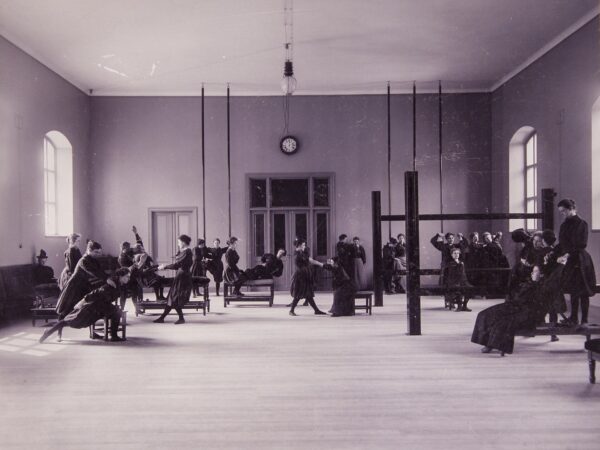
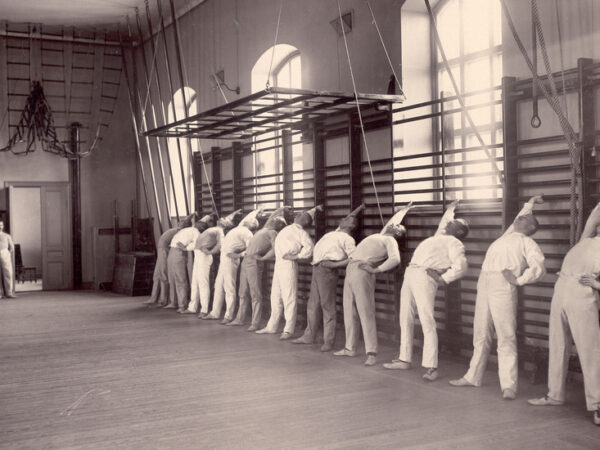
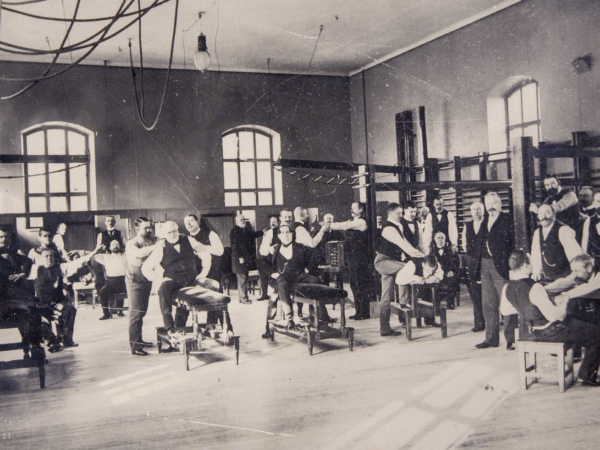
The Swedish gymnastics of Pehr Henrik Ling consisted of four branches: military (fencing), medical (physiotherapy), pedagogical (physical education) and aesthetic (dance). For the latter two, the system emphasised floor exercises along with “Swedish bars” (attached to a wall), balance beam, vaulting box and some hand-held apparatus. The movements were generally …
The First World War is considered the turning point for the institutionalisation and expansion of the physiotherapy profession. The sheer volume of injured personnel created by the mechanisation of arms, combined with emerging government social responsibility, facilitated support for a workforce trained to assist in physical rehabilitation. But the First …
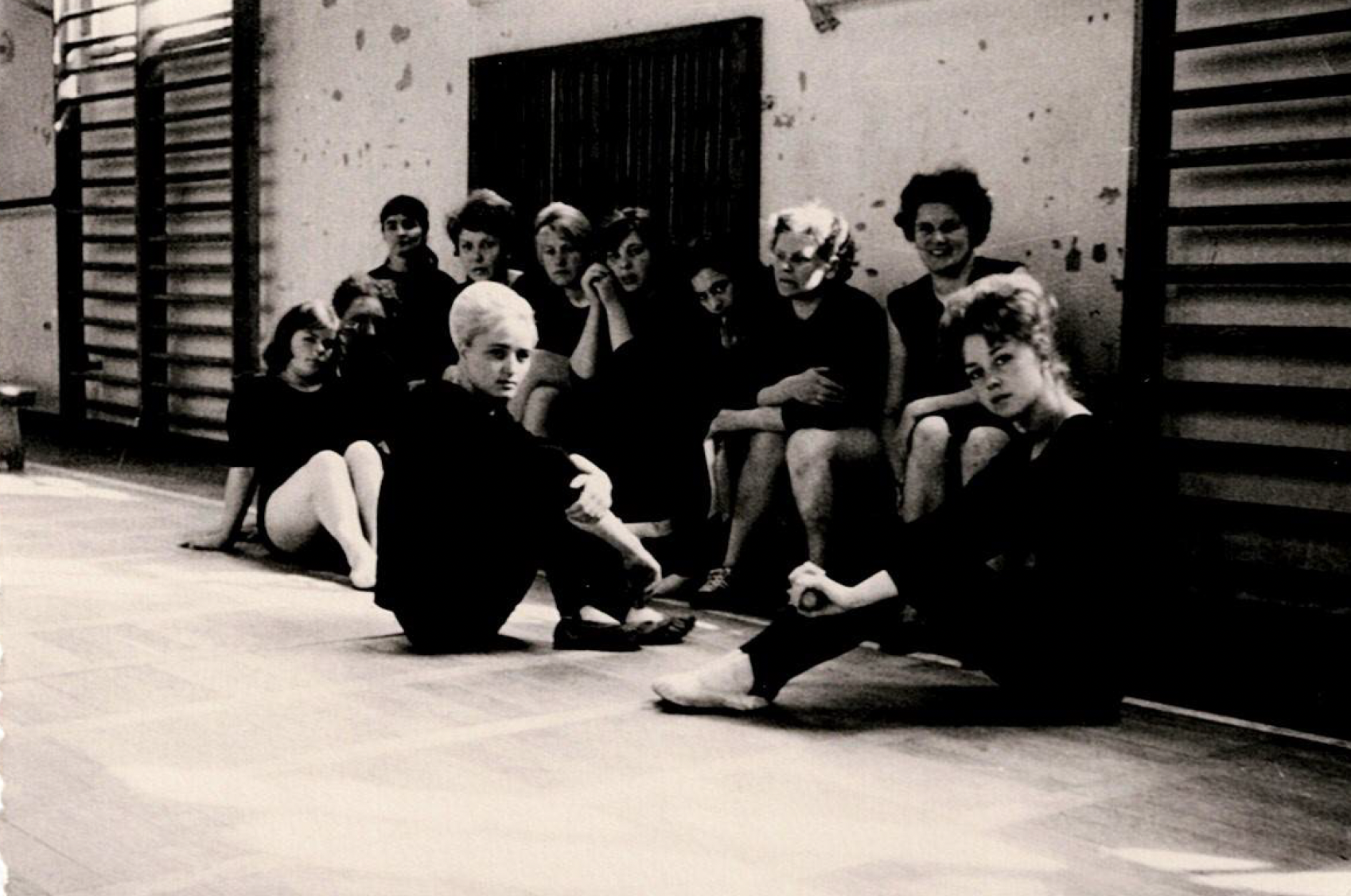
My vocational training as a physiotherapist in the German Democratic Republic (GDR) offered me my first internship in 1968 at a Saxon Thermal Bath, a leading spa facility in the GDR for rheumatic diseases, specialising in ankylosing spondylitis, but also in the late effects of polio. In the physiotherapy department, …
As an adjunct health service or a junior partner to medicine, massage has oft lacked respect. So much so, that even its own history has remained poorly understood. Massage needed someone to come along to provide intellectual rigour to its story, and it came in an unlikely form – a …
Animal physiotherapy began with surprising enthusiasm, supported from its earliest days by none other than Lord Mountbatten (1939). It began to gain recognition and caught the attention of visionary therapists and forward-thinking institutions who believed that animals, too, could benefit from physical rehabilitation. Thanks to figures like Sir Charles Strong …
The original roots of the Chartered Society of Physiotherapy (CSP) in the United Kingdom date back to the foundation of the Society of Trained Masseuses (STM) in 1894. In 1900, the Society was incorporated by the Board of Trade by Licence under the then Companies Act of Parliament to become the …
The formation of the Society of Trained Masseuses (STM) by four British nurses in 1894 is often opined as the beginning of the physiotherapy profession (Ottoson, 2015). In support, physiotherapy historian and critical thinker Dave Nicholls (2016) said on the subject, ..physiotherapy must be seen to begin when the question …
The Executive Committee met on three occasions by Zoom teleconference in the first half of 2025. During this period we farewelled Ryan McGrath (Australia) and welcomed new member Ken Miller (USA). The current Executive Committee membership consists of Glenn Ruscoe, Chair (Australia) Sarah Marshall (Canada) – leave of absence Sandra …
The commonly accepted premise of the origins of the physical therapy profession in the United States is that it began in response to the First World War (Hansson & Ottosson, 2015). This understanding has likely arisen from the hegemonic American Physical Therapy Association (APTA) focussing its historical work on its …
The word physiotherapy was used by many different practitioners in the first part of the twentieth century; including French physicians, American electrotherapeutists and later British radiologists as medical radiation was first grouped with electrotherapy. The word physiotherapy was also also used by ‘cultists’ like chiropractors and osteopaths, and untrained laypersons …